
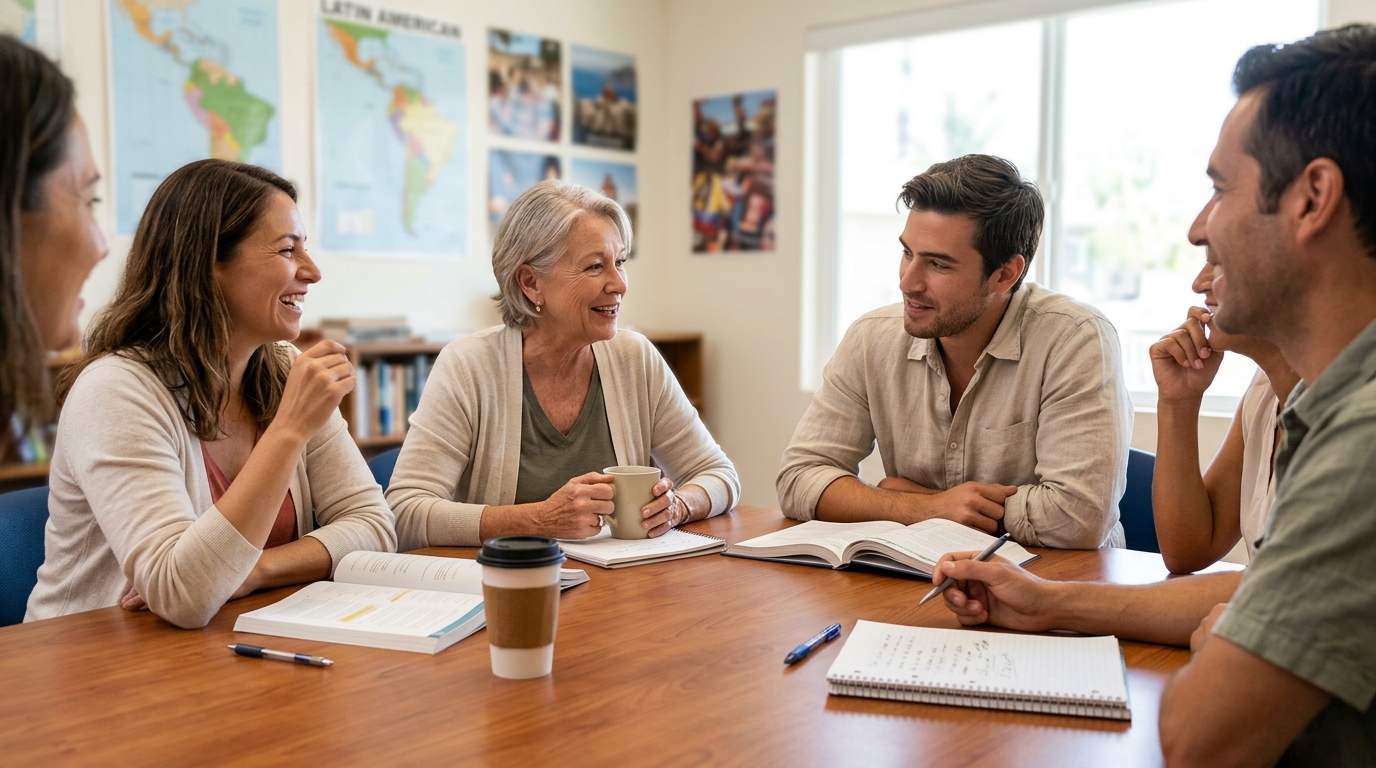
San Diego sits just 17 miles from the Mexican border, and over 28% of its population speaks Spanish at home. That makes it one of the best cities in the United States to learn and practice Spanish in a real-world setting. But with so many language schools to choose from, how do you find the right fit? This guide breaks down the key factors you should evaluate before enrolling, from teaching methodology and class size to instructor quality and community culture. Whether you are a complete beginner or an intermediate speaker looking to sharpen your conversational skills, these criteria will help you make a confident, informed decision.
1. Prioritize a Conversational Teaching Approach
A conversational teaching approach is a methodology that emphasizes spoken communication and real-life dialogue over rote grammar drills. Research from language education experts consistently shows that students retain more when they practice speaking in context rather than memorizing textbook rules.
When evaluating schools, ask whether classes focus on speaking Spanish with real-time corrections or whether they rely heavily on worksheets and written exercises. Schools like Pura Buena Onda are built around a conversational model where students develop communication skills in a relaxed, supportive setting.
According to the American Council on the Teaching of Foreign Languages (ACTFL), communicative competence should be the primary goal of language instruction. Look for a school that aligns with this principle.
2. Check Class Size and Student-to-Teacher Ratio
Class size is one of the strongest predictors of how much speaking practice you will actually get. In a lecture hall of 20 students, your opportunities to talk are limited. In a small group, you get meaningful interaction every session.
| Class Format | Typical Size | Speaking Time per Student | Best For |
|---|---|---|---|
| Large Group | 15-25 students | 2-4 minutes/hour | Budget learners, passive listeners |
| Small Group | 3-6 students | 10-15 minutes/hour | Active conversational practice |
| Semi-Private | 2 students | 20-25 minutes/hour | Targeted skill building |
| Private | 1 student | 45-55 minutes/hour | Personalized, intensive progress |
Pura Buena Onda offers small-group Spanish classes capped at 3 to 6 students per session, as well as private one-on-one lessons. This kind of intimate setting means you spend more time speaking and less time waiting for your turn.
3. Evaluate Instructor Quality and Background
A qualified Spanish instructor is a native or near-native speaker with formal training in language pedagogy and experience adapting lessons to different learner needs. Great teachers do more than lecture. They correct mistakes in real time, encourage participation, and adjust their methods to fit each student.
When researching schools, look at the teaching team. Are they experienced? Do they hold degrees in linguistics or education? At Pura Buena Onda, for example, the instructors come from diverse Latin American backgrounds and bring formal credentials such as degrees in philology and applied linguistics.
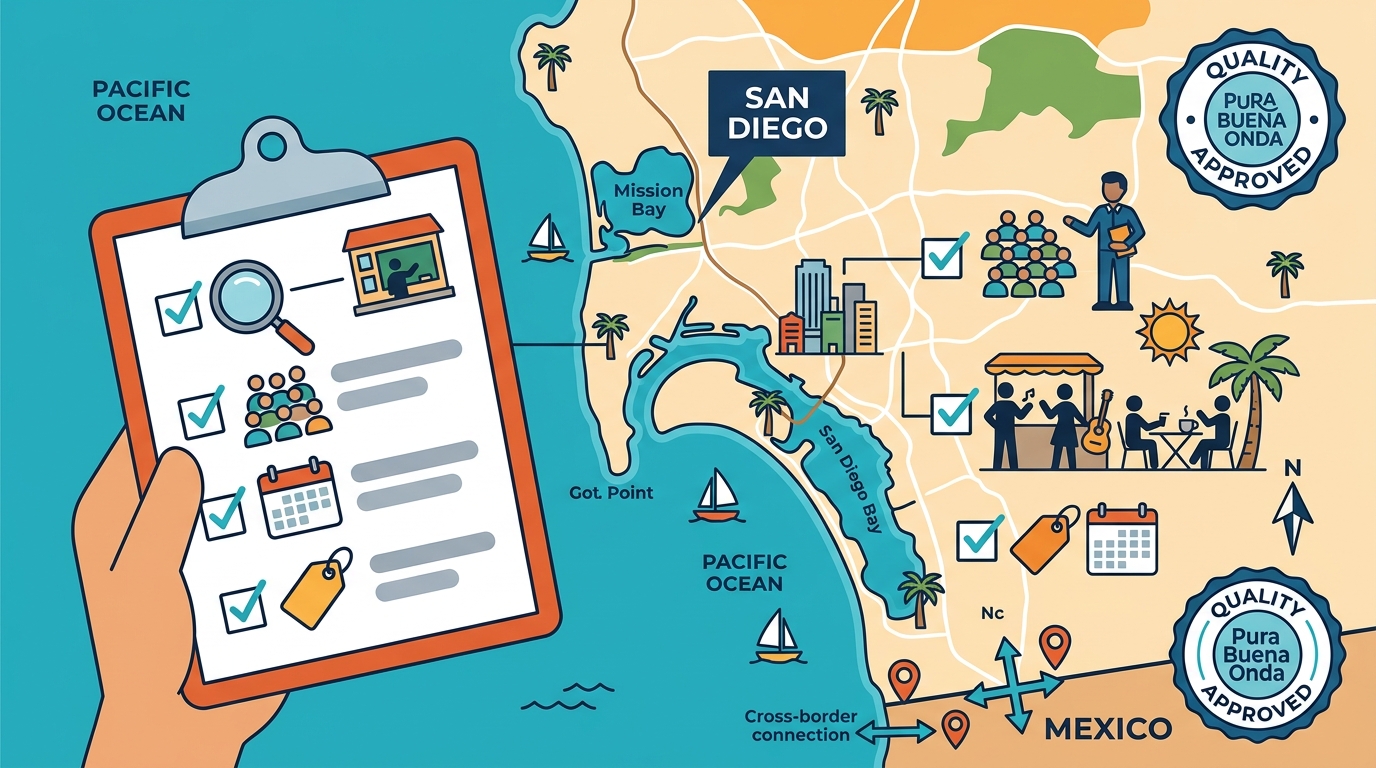
Questions to Ask About Instructors
- Are teachers native Spanish speakers?
- Do they hold relevant academic degrees?
- How do they handle real-time error correction?
- Can they teach at multiple proficiency levels?
4. Look for Scheduling Flexibility and No Contracts
Life is busy. A good Spanish school should make it easy to attend classes consistently without locking you into rigid commitments. Look for month-to-month memberships, flexible scheduling, and classes offered at various times throughout the week.
Pura Buena Onda operates on a no-contract, month-to-month model with classes available six days a week from early morning through evening. This kind of flexibility is especially important for working professionals and parents who need to fit Spanish practice around a full schedule.
What Flexible Scheduling Looks Like
The best programs let you cancel at any time, purchase classes online, and choose from multiple time slots. Avoid schools that require long-term contracts or charge hefty cancellation fees.
5. Assess the Community and Learning Environment
Learning a language is as much an emotional experience as an intellectual one. Fear of making mistakes is the number one barrier for adult language learners. The right school creates a supportive, judgment-free space where errors are treated as a natural part of growth.
A strong learning community is a group of students and teachers who share mutual encouragement, cultural curiosity, and a commitment to growth. Pura Buena Onda has cultivated this kind of environment for over 17 years, and students often compare their classes to a relaxed happy hour with friends.
Before enrolling, read student testimonials and check independent review sites. Consistent praise for a welcoming atmosphere is a strong signal that a school prioritizes the human side of learning.
6. Leverage San Diego's Unique Spanish-Speaking Culture
San Diego is not just a place to study Spanish. It is a place to live it. Hispanic and Latino Americans make up over 35% of San Diego County's population, and the city shares deep cultural and familial ties with Tijuana and Baja California. This proximity means you can practice your Spanish at local restaurants, farmers' markets, and community events every single day.
When choosing a school, consider whether it connects you to this broader cultural context. Schools rooted in San Diego's Latino heritage can help you understand not just the language but the culture behind it. Check out PBO's calendar of cultural events for examples of how a school can extend learning beyond the classroom.
Key Takeaways
- Conversational focus matters most: Choose a school that prioritizes spoken communication over textbook grammar.
- Small classes equal more practice: Groups of 3 to 6 students give you significantly more speaking time per session.
- Instructor credentials count: Native speakers with formal teaching backgrounds deliver better outcomes.
- Flexibility prevents dropout: No-contract, month-to-month plans with varied scheduling keep you consistent.
- Community drives retention: A supportive, fun environment reduces anxiety and keeps students engaged long term.
- Location is a learning tool: San Diego's deep ties to Mexican and Latin American culture provide daily immersion opportunities.
- Read real reviews: Student testimonials and independent reviews reveal what marketing materials cannot.
Frequently Asked Questions
What is the most important factor when choosing a Spanish school in San Diego?
The teaching methodology matters most. A school that emphasizes conversation and real-time speaking practice will help you build fluency faster than one focused primarily on grammar worksheets. Look for small class sizes and native-speaking instructors as secondary priorities.
How many students should be in a good Spanish class?
Ideally, a conversational Spanish class should have no more than 6 students. Smaller groups ensure each learner gets meaningful speaking time and personalized feedback from the instructor during every session.
Do I need previous Spanish experience to enroll?
No. Many San Diego Spanish schools, including Pura Buena Onda, offer beginner-level group classes designed for students with little or no prior experience. Some schools also provide placement assessments to match you with the right level.
Are online Spanish classes as effective as in-person ones?
Yes, when done right. Online classes with live instructors, small groups, and real-time interaction can be just as effective as in-person sessions. Pura Buena Onda, for instance, now holds all classes online while maintaining its conversational, community-driven format.
How much do Spanish classes in San Diego typically cost?
Costs vary widely depending on class format. Group classes generally range from $20 to $50 per session, while private lessons can run $50 to $100 or more per hour. Pura Buena Onda offers month-to-month memberships with no contracts, which can provide better value for consistent learners. Check their current rates for details.
Why is San Diego a great city to learn Spanish?
San Diego sits just miles from the Mexican border, and over 28% of the population speaks Spanish at home. This gives learners daily opportunities to practice outside the classroom in an authentically bilingual environment.
How do I know if a Spanish school has good teachers?
Review the school's instructor page for information about academic credentials, teaching experience, and native-speaker status. Schools that are transparent about their team, like Pura Buena Onda's teacher profiles, tend to invest more in instructional quality.
What is a Spanish language assessment and should I get one?
A Spanish language assessment is a structured evaluation of your current speaking, listening, and comprehension skills. It helps place you in the right class level and identifies specific areas for improvement. Pura Buena Onda offers a comprehensive evaluation that includes over 90 minutes of conversation and a detailed findings report.
Ready to Start Speaking Spanish?
Choosing the right school is the first step toward real fluency. If you want a conversational, community-focused approach with experienced native-speaking teachers and flexible scheduling, contact Pura Buena Onda today to learn about available classes and get started on your Spanish journey.