
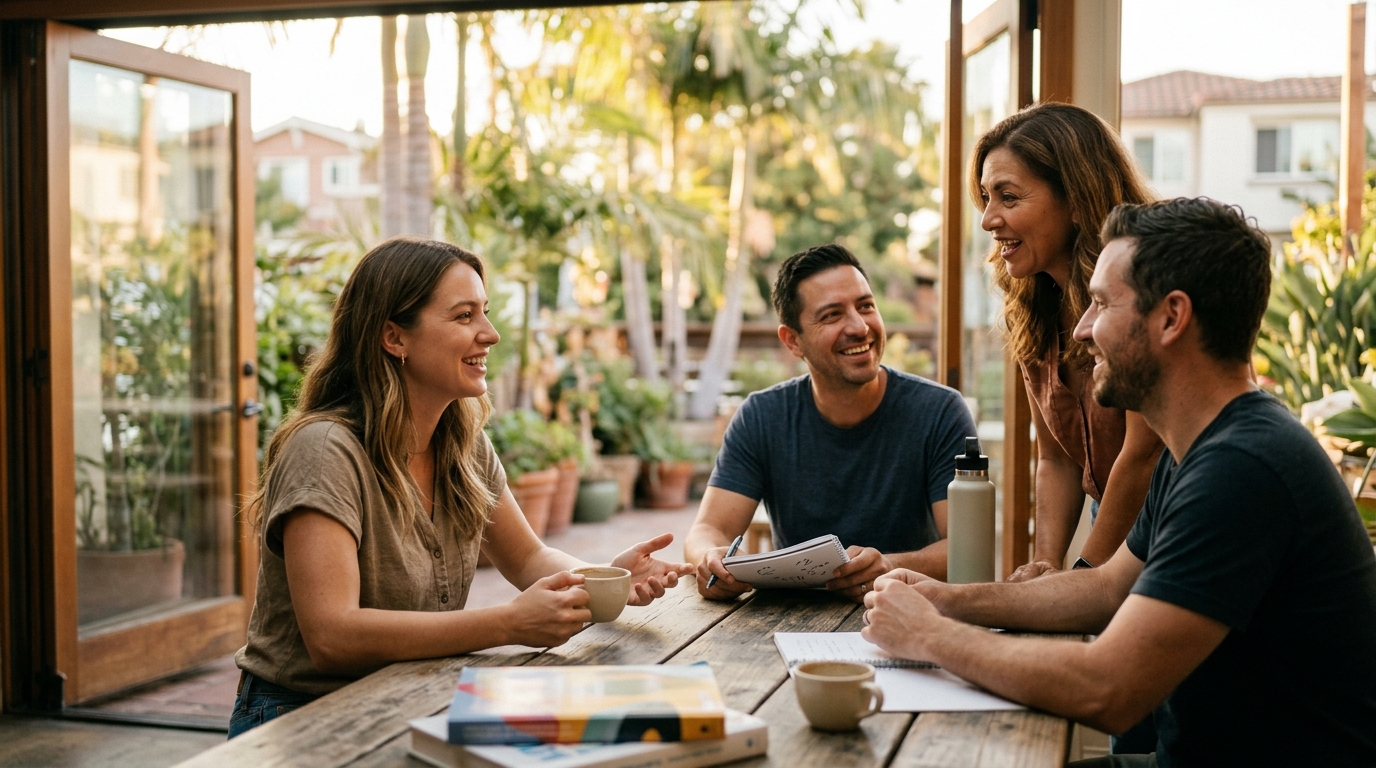
San Diego sits just 17 miles from the Mexican border, making it one of the most bilingual cities in the United States. Whether you want to connect with neighbors, advance your career, or prepare for travel, finding the right beginner Spanish class is the crucial first step. This guide breaks down exactly what to look for, compares popular class formats, and explains why a conversation-first approach gives beginners the fastest path to real fluency. By the end, you will know which San Diego Spanish program fits your schedule, budget, and learning style.
Why San Diego Is the Perfect Place to Learn Spanish
According to Data USA, roughly 26% of San Diego County residents speak Spanish at home. That means every coffee shop, farmers market, and neighborhood park becomes a practice opportunity the moment you step out of class.
UC San Diego Extended Studies notes that many local employers now view Spanish proficiency as a preferred or even required qualification. Living in a border city gives you something no app can replicate: daily, real-world immersion right outside your door.
What Beginners Actually Need in a Spanish Class
A beginner Spanish class is a structured course designed for students with little or no prior experience in the language. The best ones prioritize speaking from day one rather than front-loading grammar drills.
Avoid the Two Common Traps
Traditional classroom models focus on conjugation charts, written exercises, and vocabulary lists. Years later, many students still cannot hold a basic conversation. Language apps offer convenience but deliver limited progress because they lack live human interaction and accountability.
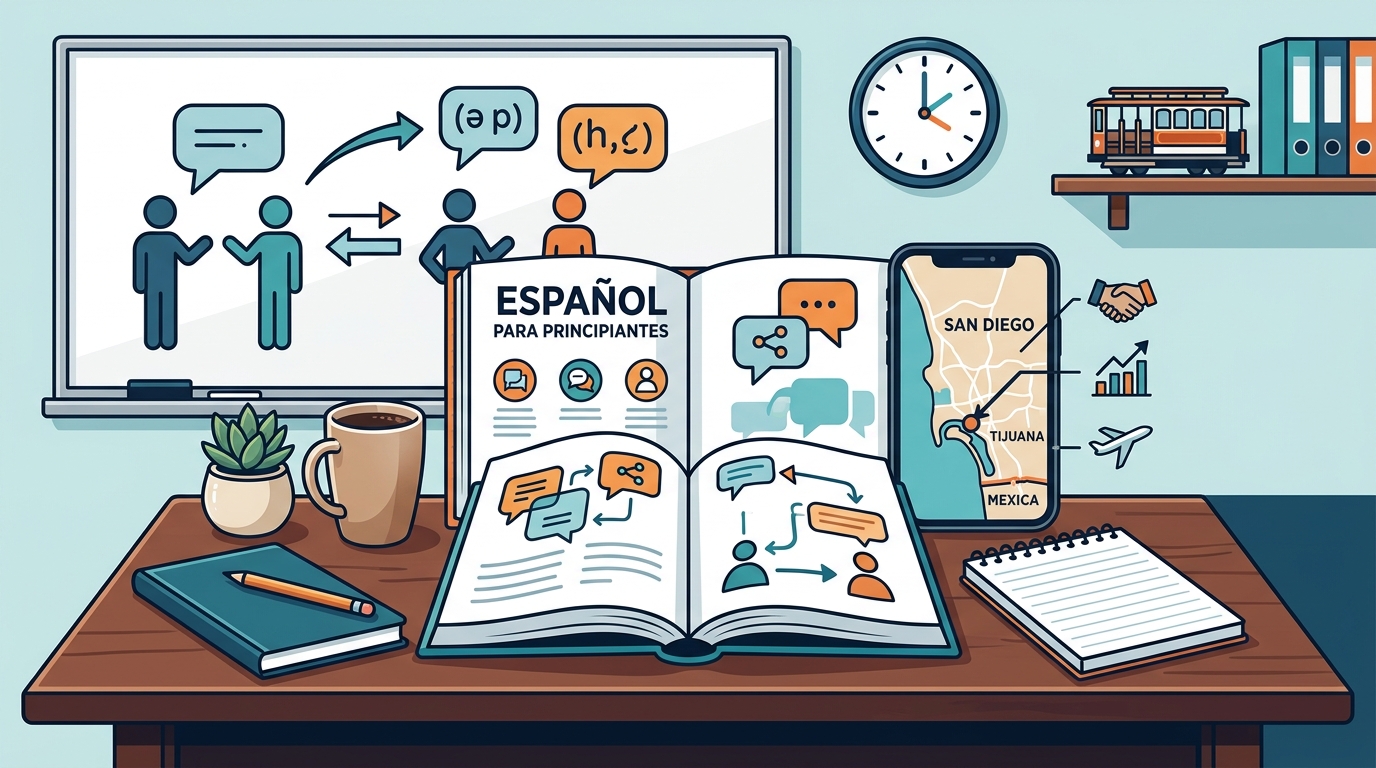
Speaking Must Come First
Studying about a language is not the same as speaking it. Beginners need to form their own sentences about their own lives from the very first session. That is how language sticks.
Class Format Comparison: Group, Private, and Semi-Private
Choosing the right format depends on your budget, personality, and goals. Below is a quick comparison of the three most common options available in San Diego.
| Format | Class Size | Session Length | Best For |
|---|---|---|---|
| Small Group | 3 to 6 students | 90 minutes | Community building, hearing diverse vocabulary, affordability |
| Semi-Private | 2 students | 60 minutes | Learning with a friend or partner at the same level |
| Private | 1 student | 60 minutes | Personalized pacing, accelerated progress, schedule flexibility |
A semi-private class is a two-student session where both learners are at the same proficiency level, offering a balance between individual attention and peer interaction. Many San Diego schools, including Pura Buena Onda's semi-private program, use this format to keep costs manageable while maintaining quality.
Why a Conversation-First Method Works Best
A conversation-first method is a teaching approach that prioritizes spoken interaction over textbook grammar study from the very first lesson. Research published by the American Council on the Teaching of Foreign Languages (ACTFL) consistently supports communicative language teaching as more effective for building oral proficiency.
Real Topics, Real Retention
When class discussions revolve around your actual life, your job, your weekend, your neighborhood, your brain forms stronger memory connections. Generic textbook dialogues about imaginary libraries simply do not stick the same way.
Confidence Builds Quickly
Speaking on day one sounds intimidating, but it removes the fear early. Students who wait months before speaking often develop a psychological barrier that is harder to overcome later.
What to Look for in a Beginner Spanish Program
Not every Spanish school in San Diego delivers the same experience. Here are five non-negotiable features to evaluate before you enroll.
Small Class Sizes
Groups larger than six students drastically reduce your speaking time. Look for programs that cap enrollment so every student participates meaningfully each session.
Native-Speaking Instructors
Learning from native speakers exposes you to authentic pronunciation, slang, and cultural nuances. Check whether the school publishes its instructor bios and credentials openly.
Flexible Scheduling and Membership Options
Consistency matters more than intensity for beginners. Monthly memberships with multiple scheduling slots each week make it easier to stay on track. A school offering over 100 weekly time slots lets you fit Spanish into your real life, not the other way around.
How Pura Buena Onda Sets Beginners Up for Success
Pura Buena Onda (PBO) is a San Diego-based conversational Spanish school that offers eight proficiency levels, from absolute beginner to fluent. Classes are held online via Zoom in Pacific Time, with eight in-person social events per year in the San Diego area.
PBO's beginner students have their first real conversation on day one. The school focuses on what really matters: speaking and listening in practical, hands-on sessions. Small group classes are capped at six students, and the environment is designed to feel fun, relaxed, and completely non-intimidating.
The school offers auto-renewing monthly memberships with up to four, six, or eight classes per month. Students manage their own schedules through an online booking tool. A free level assessment helps place you in exactly the right class from the start.
With 114 reviews on Yelp and consistent student-level advancements celebrated publicly, PBO has built a track record that speaks for itself. You can also explore specialty courses like Ser vs. Estar or The Subjunctive Made Simple as you advance.
Key Takeaways
- San Diego's bilingual culture gives Spanish learners unmatched daily practice opportunities.
- Beginners benefit most from a conversation-first method that prioritizes speaking over grammar drills.
- Small class sizes (six students or fewer) ensure every learner gets meaningful speaking time.
- Private, semi-private, and small group formats each serve different budgets and goals.
- Look for native-speaking instructors, flexible scheduling, and structured level assessments.
- Pura Buena Onda offers eight levels, online classes via Zoom, and a relaxed atmosphere designed for beginners.
- Consistency through monthly memberships matters more than cramming weekend intensives.
Frequently Asked Questions
How long does it take a beginner to hold a basic Spanish conversation?
With consistent weekly classes and daily practice, most beginners can manage simple real-life conversations within two to three months. At Pura Buena Onda, students begin constructing their own sentences on day one, which accelerates confidence and retention.
Are online Spanish classes as effective as in-person classes?
Yes, when the class is live, synchronous, and interactive. PBO holds all classes via Zoom with small groups, ensuring real-time feedback from native-speaking instructors. In-person social events in San Diego supplement the online learning.
What is the best class format for a complete beginner?
Small group classes are often ideal because you hear vocabulary from classmates that you would never generate on your own. However, private classes work better if you need a fully customized pace or have scheduling constraints.
How much do beginner Spanish classes cost in San Diego?
Prices vary widely. Community college courses may cost a few hundred dollars per semester, while private language schools charge monthly memberships. PBO offers tiered memberships based on the number of classes per month. Visit the PBO rates page for current pricing.
Do I need to buy textbooks or materials?
Most conversation-focused schools, including Pura Buena Onda, do not require textbooks. Lessons are built around real-life topics and instructor-prepared materials delivered digitally.
Can I try a class before committing to a membership?
Many schools offer a trial class or assessment. PBO provides a level assessment so you can experience the teaching style and get placed in the right group before starting your membership.
What if I studied Spanish years ago but forgot most of it?
You are not starting from zero. A level assessment will identify what you retained and place you appropriately. Refresher students often advance faster than true beginners because passive vocabulary reactivates quickly during conversation practice.
Is it better to learn Latin American Spanish or European Spanish in San Diego?
Given San Diego's proximity to Mexico and its large Mexican-American community, Latin American Spanish is the most practical choice. Pura Buena Onda's instructors are from Latin America, providing authentic regional pronunciation and cultural context.
Start Your Spanish Journey Today
Ready to speak Spanish with confidence? Sign up for a free level assessment at Pura Buena Onda and find the perfect beginner class for your schedule. Your first real conversation in Spanish is closer than you think.