

So you want to improve your Spanish fast, but you are not sure where to start. Maybe you have been studying for months and still freeze in real conversations, or maybe you are just getting started and want to avoid the common traps. The good news is that rapid improvement is absolutely possible when you focus on the right strategies. This guide walks you through seven actionable tips backed by language-learning research and real classroom experience. Whether you are a complete beginner or an intermediate learner looking to break through a plateau, these methods will help you build confidence and fluency without burning out.
1. Speak From Day One
The fastest way to improve your Spanish is to start speaking immediately. Active speaking is the practice of producing language out loud rather than just consuming it passively. Many learners spend years studying grammar rules but never develop the ability to hold a basic conversation.
Try narrating your daily routine in Spanish. While making breakfast, think something like "Ahora estoy preparando un cafe." When you notice a word you don't know, look it up. This trains your brain to stop translating directly from English. You can also practice with a 31-day speaking challenge that forces you to use the language every single day.
2. Immerse Yourself in Spanish Daily
Language immersion is surrounding yourself with your target language in everyday settings. You do not need to move to a Spanish-speaking country to achieve this. Small, consistent changes to your environment make a huge difference over time.
Switch your phone, social media apps, and streaming services to Spanish. Listen to Spanish-language podcasts during your commute. According to CIS University, integrating Spanish into your daily routine can significantly speed up your progress. Even 3 to 4 hours per week of regular exposure can produce noticeable results in 6 to 12 months.
3. Set Specific, Measurable Goals
Vague goals like "get better at Spanish" rarely lead to real improvement. Instead, set precise targets. For example, aim to hold a five-minute conversation about your weekend or learn 10 new vocabulary words per week.
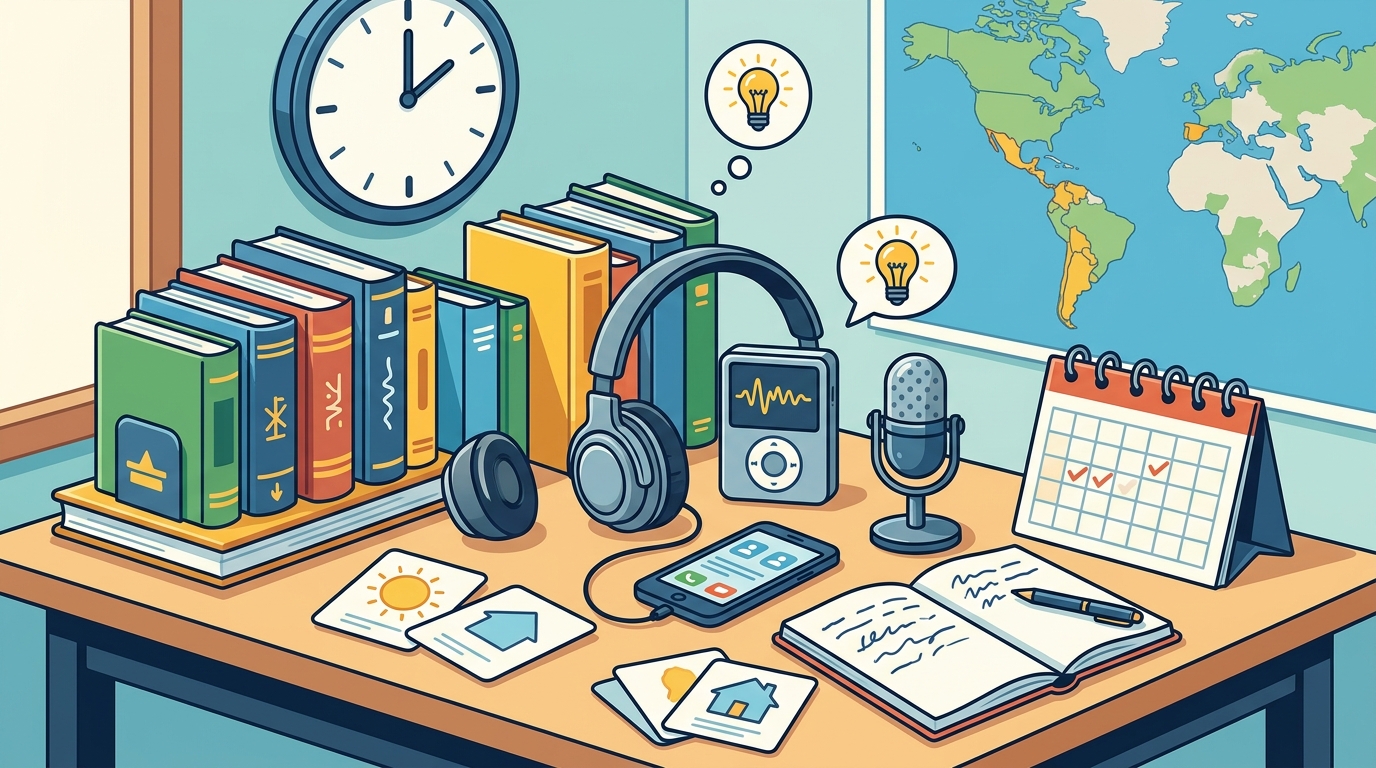
Use the SMART Framework
SMART goals are objectives that are Specific, Measurable, Achievable, Relevant, and Time-bound. Rather than "practice more," try "speak for 10 minutes every day this month." A language assessment can help you identify your exact strengths and weaknesses so you set the right targets.
4. Take Conversational Spanish Classes
Self-study only gets you so far. Working with experienced teachers who provide real-time corrections accelerates your learning dramatically. At Pura Buena Onda, students practice speaking Spanish with other human beings, receiving live feedback and guidance to sound more natural.
Group Classes vs. Private Lessons
Small-group classes (3 to 6 students, 90 minutes each) offer a social environment where you build confidence through peer interaction. Private lessons let you focus entirely on your personal weak spots. Many students combine both for maximum growth.
Why a Teacher Matters
As language educators consistently point out, learners who make the fastest progress are those who practice in a controlled environment where mistakes are welcomed. A good teacher checks your pronunciation, corrects your grammar in context, and keeps you accountable.
5. Build Your Listening Skills With Media
Watching Spanish TV shows and movies is one of the most enjoyable ways to improve. According to Berges Institute, watching TV helps you learn vocabulary, connect grammar to real syntax, and improve listening skills all at once. Start with Spanish subtitles, then gradually remove them as your comprehension grows.
Reading aloud for 5 to 10 minutes a day also trains your mouth muscles and builds pronunciation confidence. Grab a news article, a blog post, or a short story and read it out loud.
6. Embrace Mistakes as Progress
Fear of making errors is the number one barrier for adult Spanish learners. Perfectionism slows you down more than bad grammar ever will. At Pura Buena Onda, the philosophy is simple: learning happens through community, mistakes, and fun. Check out their post on why adults struggle to learn Spanish for a deeper dive into overcoming this mindset block.
Keep a journal in Spanish. Write about your day, your thoughts, even your frustrations. This reinforces vocabulary and sentence structure naturally while building the confidence to express yourself freely.
7. Learning Methods Compared
Not every method delivers the same results. Here is how the most popular approaches stack up for fast improvement:
| Method | Best For | Speed of Results | Cost |
|---|---|---|---|
| Conversation classes (group) | Speaking fluency, confidence | Fast (weeks) | $$ |
| Private lessons | Targeted weaknesses | Fast (weeks) | $$$ |
| Language apps (e.g., Duolingo) | Vocabulary basics | Slow (months) | Free/$ |
| TV shows and podcasts | Listening comprehension | Medium (months) | Free |
| Reading aloud | Pronunciation, fluency | Medium (weeks) | Free |
| Immersion abroad | All skills simultaneously | Very fast (days) | $$$$ |
Key Takeaways
- Start speaking Spanish from day one, even if you make mistakes constantly.
- Immerse yourself by switching your devices, media, and daily habits to Spanish.
- Set SMART goals and track your progress weekly.
- Take structured conversation classes with experienced, native-speaking teachers.
- Use Spanish TV, podcasts, and music to build listening skills passively.
- Write a daily journal in Spanish to reinforce vocabulary and sentence patterns.
- Combine multiple methods (classes, self-study, media) for the fastest results.
Frequently Asked Questions
How long does it take to become conversational in Spanish?
Most dedicated learners reach a basic conversational level within 6 to 12 months of consistent practice. The U.S. Foreign Service Institute classifies Spanish as a Category I language, estimating roughly 600 to 750 hours of study for professional proficiency.
Can I learn Spanish quickly without a teacher?
You can build vocabulary and grammar knowledge on your own, but speaking fluency almost always requires real-time practice with another person. A teacher provides corrections, accountability, and structured progression that apps cannot replicate.
What is the single most important thing I can do to improve?
Speak. Regularly. With real people. Reading and listening help, but nothing replaces the act of producing language out loud in a conversation setting.
Are group classes or private lessons better?
Both have unique advantages. Group classes build social confidence and expose you to different accents, while private lessons let you target your specific weaknesses. Many learners at Pura Buena Onda combine both formats for well-rounded improvement.
How much time per week should I dedicate to Spanish?
Even 3 to 4 hours per week of focused practice can produce meaningful improvement. Consistency matters far more than marathon study sessions.
Is it too late for adults to become fluent in Spanish?
Absolutely not. Adults bring analytical skills, motivation, and life experience that actually accelerate language learning. The key is choosing methods that prioritize communication over memorization.
What are the best free resources to supplement my classes?
Spanish-language podcasts, YouTube channels, Netflix shows with Spanish subtitles, and journaling are all free and highly effective. Pura Buena Onda also offers free content through their Patreon community and blog.
Ready to Start Speaking Spanish With Confidence?
You now have a clear roadmap for improving your Spanish quickly. The only thing left is to take action. Contact Pura Buena Onda today to set up your first class or schedule a comprehensive language assessment. Classes are held online, so you can join from anywhere. Stop studying alone and start speaking with real people.