

Learning a new language as an adult is a significant cognitive investment, yet traditional classroom settings often fail to accommodate the busy schedules of modern professionals. Recent data indicates that over 40% of adult language learners prefer digital platforms due to the flexibility they offer, a trend that has accelerated significantly since 2020. This shift is not merely about convenience; it is about creating an environment where adults can engage with the language in a way that respects their time and learning style. For those starting from zero, the question is not just whether online classes exist, but which format provides the most effective path to fluency. (About Pura Buena Onda)
Why Online Learning Works for Adult Beginners
Adult learners possess a distinct advantage over children: the ability to understand complex grammatical structures and abstract concepts. However, they also face the challenge of overcoming the fear of making mistakes. Online Spanish classes for adults who are complete beginners are specifically designed to mitigate this anxiety. By removing the physical pressure of a traditional classroom, digital platforms allow students to focus on communication rather than perfection.
According to research published by the McLaren University, online language acquisition often leads to higher retention rates when the curriculum emphasizes conversational practice over rote memorization. This approach aligns with the "acquisition" theory, which posits that language is learned best through meaningful interaction rather than explicit rule study.
Furthermore, the flexibility of online schedules allows adults to integrate learning into their daily routines. Whether it is a 30-minute session before work or a weekend group class, consistency becomes easier to maintain. This consistency is critical because language learning is a marathon, not a sprint. The ability to show up regularly, even when life gets busy, is the single biggest predictor of success for adult beginners.
Understanding Class Formats: Group vs. Private
When searching for online Spanish classes for adults who are complete beginners, you will typically encounter two primary formats: small-group classes and private instruction. Each has distinct advantages depending on your personality and learning goals.
Small-Group Immersion Classes
Small-group classes, typically consisting of three to six students, offer the most balanced approach for beginners. This format mimics a natural social environment, allowing you to practice listening and speaking with peers at the same level. The dynamic is less intimidating than a large lecture hall but more structured than self-study apps.
In these classes, the focus is on "real-life" conversations. You will not spend hours conjugating verbs in isolation. Instead, you will discuss topics relevant to your life, such as travel plans, family dynamics, or daily routines. This contextual learning helps anchor new vocabulary in your memory more effectively than abstract drills.
Private One-on-One Instruction
Private classes offer a customized curriculum tailored entirely to your specific needs and pace. If you have a tight deadline, such as an upcoming trip or a professional requirement, private lessons allow for accelerated learning. The instructor can immediately correct errors and focus on the specific areas where you struggle, whether that is pronunciation, grammar, or vocabulary.
For complete beginners, private instruction can be particularly effective in building confidence. You can make mistakes without the fear of judgment from peers, which is crucial in the early stages of language acquisition. However, it lacks the social interaction component that makes group classes so engaging for many learners.
What to Expect in Your First Few Weeks
Starting an online Spanish class as a complete beginner can feel overwhelming, but a well-structured curriculum provides a clear roadmap. The first few weeks are dedicated to building a foundation that supports long-term fluency.
Week 1: The Basics of Communication
Your initial sessions will focus on essential greetings, introductions, and basic survival phrases. You will learn how to say hello, introduce yourself, and ask simple questions. The goal is to get you speaking immediately, even if your sentences are short. This early success builds momentum and reduces the initial anxiety of starting a new language.
Week 2-4: Building Sentence Structure
As you progress, you will begin to understand the basic structure of Spanish sentences. This includes learning the difference between "ser" and "estar," two verbs that both translate to "to be" in English but are used in different contexts. Understanding this distinction is critical for accurate communication. You will also start to learn how to form simple questions and negative statements.
Month 2: Expanding Vocabulary
By the second month, you will begin to expand your vocabulary into specific categories such as food, family, and directions. You will start to engage in longer conversations, using the grammar structures you have learned to express more complex ideas. The focus shifts from simply understanding the language to actively using it to convey meaning.
Technology and Accessibility Requirements
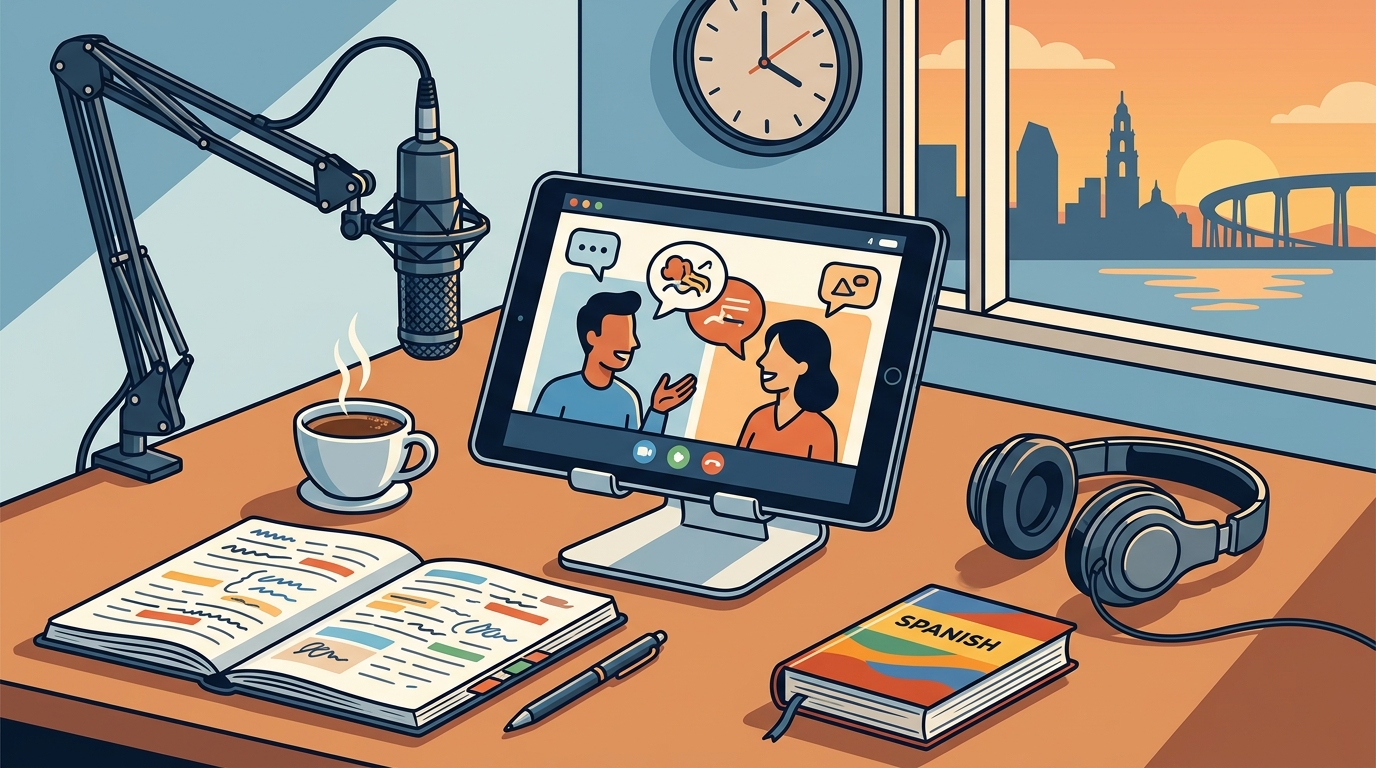
One of the primary concerns for adult beginners is the technical aspect of online learning. Fortunately, the barrier to entry is low. All you need is a reliable internet connection, a device with a camera and microphone, and a quiet space to focus.
Most online classes are conducted via Zoom or similar video conferencing platforms. These platforms are user-friendly and require minimal technical knowledge. If you are not comfortable with technology, many providers offer support to help you get set up. The key is to ensure your audio and video are working correctly before the class begins to avoid any disruptions.
Additionally, many programs provide supplementary materials, such as digital textbooks, audio recordings, and practice exercises. These resources allow you to reinforce what you have learned in class and continue your practice outside of scheduled sessions. This blended approach enhances the learning experience and ensures that you are getting the most out of your investment.
How to Choose the Right Program
With so many options available, choosing the right online Spanish class for adults who are complete beginners requires careful consideration. Here are the key factors to evaluate:
| Factor | Small-Group Classes | Private Lessons | Self-Paced Apps |
|---|---|---|---|
| Cost | Mid-range | High | Low |
| Flexibility | Fixed Schedule | Highly Flexible | Maximum |
| Speaking Practice | High | Maximum | Low |
| Accountability | High | Medium | Low |
| Social Interaction | High | Low | None |
When evaluating programs, look for those that emphasize conversational practice from day one. Avoid programs that rely heavily on grammar drills or textbook exercises. The goal is to speak Spanish, not just study it. Additionally, check the credentials of the instructors. Native speakers with teaching experience are ideal, as they can provide authentic pronunciation and cultural context.
It is also important to consider the class size. Smaller classes allow for more individual attention and speaking time. If you are a complete beginner, a class with more than six students may not provide enough opportunity for you to practice speaking. Look for programs that explicitly state their class sizes and teaching methodologies.
Key Takeaways for Success
- Consistency is Key: Regular practice, even in short bursts, is more effective than occasional long sessions.
- Embrace Mistakes: Making errors is a natural part of the learning process. Do not let fear of perfection stop you from speaking.
- Choose the Right Format: Small-group classes offer a balance of structure and social interaction, while private lessons offer maximum flexibility.
- Focus on Conversation: Prioritize programs that emphasize real-life communication over rote memorization.
- Use Supplementary Materials: Reinforce your learning with digital textbooks, audio recordings, and practice exercises.
- Check Instructor Credentials: Ensure your teachers are native speakers with teaching experience.
- Start Early: Begin your journey with a program that offers a clear curriculum for complete beginners.
Frequently Asked Questions
Do I need any prior knowledge of Spanish to start?
No, online Spanish classes for adults who are complete beginners are designed to start from zero. You do not need any prior knowledge of the language. The curriculum is structured to build your skills progressively, starting with basic greetings and simple phrases.
How long does it take to become conversational?
The timeline varies depending on the intensity of your study and your personal aptitude. However, with consistent practice in a small-group setting, most adults can hold basic conversations within three to six months. Private lessons can accelerate this process by providing more focused instruction.
What if I miss a class?
Most online programs offer recordings of live classes or flexible scheduling options. If you miss a session, you can often review the material later or join a different class at a time that works for you. This flexibility is one of the primary benefits of online learning.
Are online classes as effective as in-person classes?
Research suggests that online classes can be just as effective as in-person classes, provided they are well-structured and emphasize interactive learning. The key is to choose a program that prioritizes speaking practice and provides immediate feedback from instructors.
What technology do I need?
You will need a device with a camera and microphone, such as a laptop, tablet, or smartphone, and a reliable internet connection. Most programs use standard video conferencing platforms like Zoom, which are easy to use and require minimal technical knowledge.
Can I learn Spanish at my own pace?
While live online classes follow a set schedule, they offer the flexibility to join at different times. Some programs also offer self-paced components, such as digital textbooks and practice exercises, that allow you to reinforce your learning outside of class.
How much do online Spanish classes cost?
Costs vary widely depending on the format and provider. Small-group classes typically range from $15 to $30 per session, while private lessons can cost $40 to $80 per hour. Some programs offer monthly subscription models, which can be more cost-effective for regular learners.
Start Your Journey Today
Learning Spanish as an adult is a rewarding journey that opens doors to new cultures, connections, and opportunities. By choosing the right online class, you can overcome the barriers of time and location and start speaking with confidence. At Pura Buena Onda, we specialize in creating a relaxed, fun, and non-judgmental environment for adult beginners. Our small-group classes focus on real conversations, helping you acquire the language naturally and effectively. Don't wait another day to start your Spanish journey. Visit our homepage to explore our class options and schedule a free consultation to find the perfect fit for your needs.