
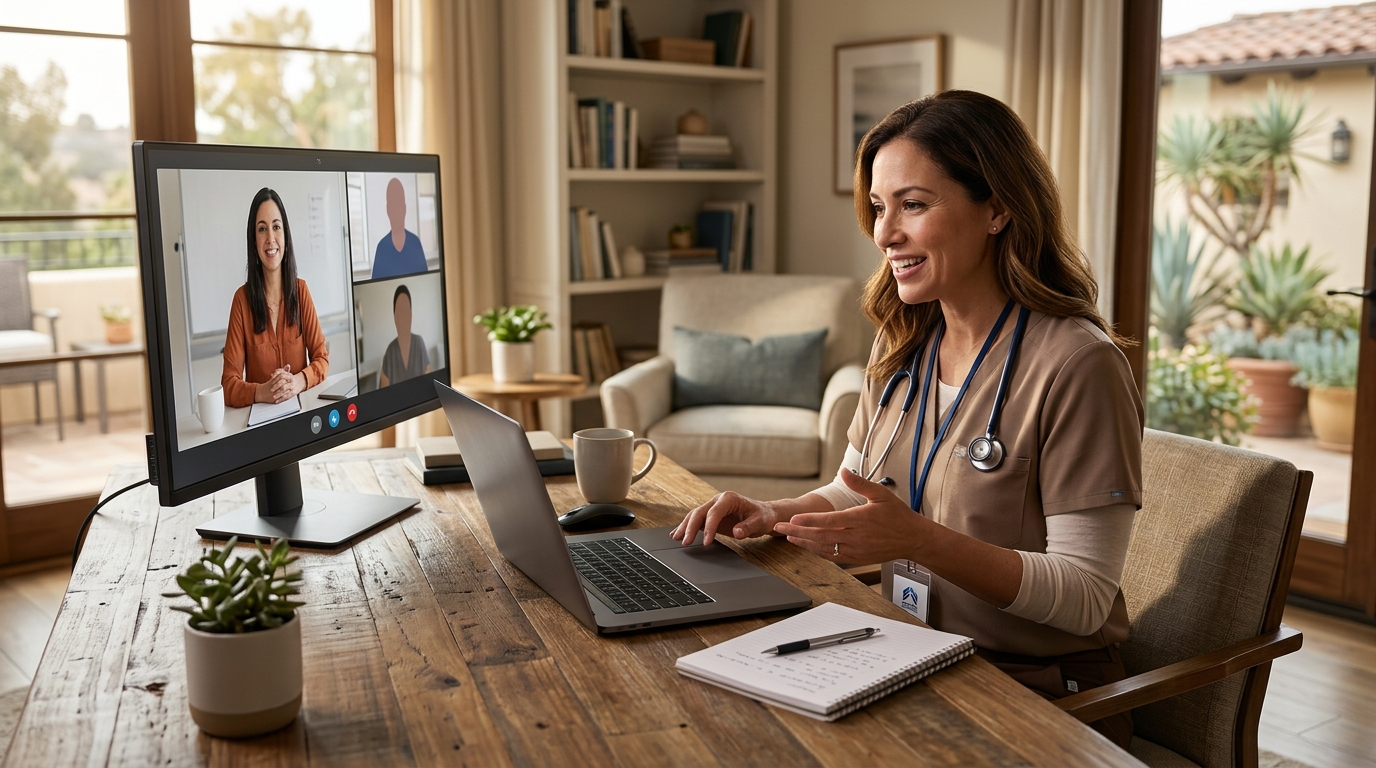
Conversational Spanish Classes for Healthcare Professionals: The Ultimate Guide
Healthcare professionals can find effective conversational Spanish classes through online schools that specialize in real-time dialogue and clinical communication. Pura Buena Onda offers 100% online instruction designed for adults, focusing on active speaking rather than passive memorization. This guide covers practice methods, confidence building, native speaker interaction, medical Spanish courses, and clinical communication skills.
Conversational Practice Methods
Traditional language learning often relies on textbooks and grammar drills. These methods build vocabulary but rarely develop the ability to produce language in real time. For healthcare professionals, the gap between knowing a word and using it in a high-stakes conversation is critical. Effective practice methods prioritize active production over passive recognition.
The Limitations of Passive Study
Apps and self-study tools are useful for vocabulary acquisition. However, they cannot simulate the pressure of a clinical encounter. A learner may know the word for "pain" but freeze when a patient describes a complex symptom. This disconnect is common in traditional classroom settings where speaking time is limited. To bridge this gap, learners need environments that force immediate verbal responses.
Active Dialogue as a Core Skill
Conversational practice is the act of using language to exchange information in real time. In a healthcare context, this means asking open-ended questions, clarifying symptoms, and explaining procedures. Pura Buena Onda structures its classes around this principle. Students engage in live conversations with native-speaking teachers. The focus is on flow, natural phrasing, and immediate correction. This approach ensures that learners are not just memorizing lists, but building the muscle memory needed for professional interactions.
Consistency Over Intensity
Language acquisition is a long-term process. Consistency is the key driver of progress. Short, frequent practice sessions are more effective than infrequent, long study blocks. For busy healthcare workers, this means integrating Spanish practice into daily routines. Online classes offer the flexibility to practice at times that fit demanding schedules. The goal is to maintain a steady rhythm of exposure and production.
Speaking Confidence Building
Confidence in a second language is built through repeated, low-stakes exposure to speaking situations. Fear of making mistakes is the primary barrier for many adult learners. In a clinical setting, this fear can lead to avoidance of Spanish-speaking patients. Building confidence requires a safe environment where errors are treated as learning opportunities rather than failures.
Creating a Safe Learning Environment
A supportive classroom culture is essential for confidence building. Teachers must provide real-time corrections in a non-judgmental way. Pura Buena Onda emphasizes a relaxed, fun, and non-intimidating atmosphere. This environment allows students to take risks with their language. When students feel safe, they are more likely to attempt complex sentences. This risk-taking is where significant progress happens.
Overcoming the Plateau
Many learners reach a plateau where they understand more than they can say. This is a common frustration. Breaking through this plateau requires shifting focus from accuracy to fluency. Learners must practice speaking even when they are not 100% confident in their grammar. This shift in mindset is crucial for professional readiness. It allows healthcare workers to communicate effectively despite imperfect language skills.
Real-Time Feedback Loops
Feedback is the engine of confidence building. When a teacher corrects a mistake immediately, the learner can adjust their approach in the next sentence. This rapid feedback loop accelerates learning. It also reduces anxiety because the learner knows they are on the right track. In online classes, this feedback is delivered through live video interaction. The visual and auditory cues from the teacher help students understand not just what was wrong, but how to say it more naturally.
Native Speaker Interaction
Interaction with native speakers is the gold standard for language learning. It exposes learners to authentic pronunciation, idioms, and cultural nuances. For healthcare professionals, this interaction is not just about language; it is about cultural competence. Understanding how patients from different backgrounds communicate is vital for effective care.
Authentic Pronunciation and Intonation
Textbooks often present an idealized version of Spanish. Native speakers use a variety of accents, speeds, and colloquialisms. Exposure to these variations helps learners develop robust listening skills. Pura Buena Onda employs teachers from across Latin America and Spain. This diversity ensures that students are exposed to different dialects and speech patterns. This exposure prepares them for the reality of working with patients from various regions.
Cultural Nuances in Healthcare
Language is deeply tied to culture. In healthcare, cultural nuances affect how patients describe symptoms and how they perceive authority. A native speaker can explain these cultural contexts in a way that a textbook cannot. For example, certain phrases may be considered rude or overly direct in some cultures. Understanding these subtleties is essential for building trust with patients. Native speaker interaction provides this critical cultural layer.
Building Professional Relationships
Medical Spanish Courses
Medical Spanish is a specialized field that combines language skills with medical terminology. It is not just about translating words; it is about understanding the context of healthcare. A dedicated medical Spanish course provides the specific vocabulary and phrases needed for clinical settings. This focus allows learners to apply their language skills directly to their profession.
Specialized Vocabulary and Terminology
Contextual Learning
Context is key to mastering medical Spanish. A word like "dolor" (pain) has different connotations depending on how it is used. A course that provides context helps learners understand these nuances. It teaches them how to ask follow-up questions and how to respond to patient concerns. This contextual learning is more effective than rote memorization. It prepares learners for the unpredictability of real clinical situations.
Integration with General Spanish
Medical Spanish should not be learned in isolation. It is most effective when integrated with general conversational Spanish. Learners need to be able to switch between casual and formal registers. They need to be able to build rapport before diving into medical details. Pura Buena Onda’s approach combines general conversation with specialized topics. This ensures that learners develop well-rounded language skills that are applicable in both social and professional contexts.
Clinical Communication Practice
Clinical communication is the application of language skills in a healthcare setting. It involves a specific set of skills, including history taking, patient education, and informed consent. Practicing these skills in a simulated environment is crucial for professional development. It allows learners to refine their communication strategies before using them with real patients.
Simulated Clinical Encounters
Active Listening and Clarification
Active listening is a critical component of clinical communication. It involves not just hearing the words, but understanding the intent and emotion behind them. Learners must practice paraphrasing and clarifying to ensure they have understood the patient correctly. This skill is essential for avoiding misunderstandings. In a language learning context, it also helps learners process information in real time. It forces them to listen actively rather than passively.
Empathy and Rapport Building
Empathy is a universal language, but it is expressed differently in different cultures. Learners must practice using language to show empathy and build rapport. This includes using appropriate tone, pace, and word choice. It also involves understanding cultural expectations around emotional expression. Pura Buena Onda’s focus on real conversations helps learners develop these interpersonal skills. They learn how to connect with patients on a human level, which is essential for effective care.
Key Takeaways
- Active conversational practice is more effective than passive study for developing speaking skills.
- Confidence is built through a safe, supportive environment where mistakes are treated as learning opportunities.
- Interaction with native speakers provides exposure to authentic pronunciation, idioms, and cultural nuances.
- Medical Spanish courses should focus on contextual learning, not just vocabulary memorization.
- Clinical communication practice involves simulated encounters, active listening, and empathy building.
- Consistency is the key driver of language acquisition; short, frequent sessions are more effective than infrequent, long ones.
- Online classes offer the flexibility needed for busy healthcare professionals to maintain a steady practice rhythm.
- Specialized tutoring can tailor learning to specific roles in healthcare, ensuring relevance and applicability.
Frequently Asked Questions
What is the best way to learn medical Spanish?
The best way to learn medical Spanish is through a combination of specialized vocabulary study and active conversational practice. You need to understand the terms in context, not just as isolated words. Engaging in live conversations with native speakers helps you apply these terms in realistic scenarios. This approach ensures that you can use the language effectively in a clinical setting.
How long does it take to become proficient in conversational Spanish?
Language learning is highly individual. Progress depends on consistency, exposure, and practice. Conversational confidence often takes sustained practice over a longer period, roughly two years for many learners depending on goals and consistency. There is no guaranteed timeline, but regular practice accelerates progress.
Are online classes effective for learning to speak Spanish?
Yes, online classes are highly effective for learning to speak Spanish. They provide the flexibility needed for busy schedules and offer real-time interaction with teachers. The key is to choose a program that prioritizes active speaking over passive listening. Live video interaction allows for immediate feedback and correction, which is crucial for speaking development.
Do I need prior Spanish knowledge to start medical Spanish classes?
No, you do not need prior Spanish knowledge to start. Many programs offer beginner classes that require no prior experience. You can start from the basics and gradually build up to more complex medical terminology. The important thing is to start with a level that matches your current ability to ensure a positive learning experience.
How can I build confidence in speaking Spanish?
Confidence is built through repeated, low-stakes exposure to speaking situations. A supportive classroom culture where mistakes are treated as learning opportunities is essential. Real-time feedback from teachers helps you adjust your approach and reduces anxiety. Over time, this practice builds the muscle memory needed for confident communication.
What is the difference between general Spanish and medical Spanish?
General Spanish focuses on everyday conversation and social interaction. Medical Spanish adds specialized vocabulary and terminology related to healthcare. It also involves specific communication strategies for clinical settings, such as history taking and patient education. Medical Spanish is a subset of general Spanish, but it requires a deeper understanding of context and culture.
Can I learn Spanish while working full-time in healthcare?
Yes, you can learn Spanish while working full-time. Online classes offer the flexibility to fit your schedule. Consistency is more important than intensity, so short, frequent practice sessions are ideal. Many healthcare professionals successfully learn Spanish by integrating it into their daily routines. The key is to find a program that respects your time and energy.
How do I find the right level for my Spanish classes?
Most reputable schools offer a level assessment to help you find the right class. This assessment evaluates your current speaking and listening skills. It ensures that you are placed in a class that matches your ability. This is important for maintaining motivation and ensuring progress. You can request a level assessment by contacting the school directly.
Conclusion
Healthcare professionals seeking to improve their Spanish skills have several effective options. The key is to choose a program that prioritizes active conversation and real-time feedback. Pura Buena Onda offers a 100% online solution that fits the demanding schedules of healthcare workers. With 19 years of experience, they provide a supportive environment for building confidence and clinical communication skills. To get started, you can book a free consultation to discuss your goals and find the right class for you.