

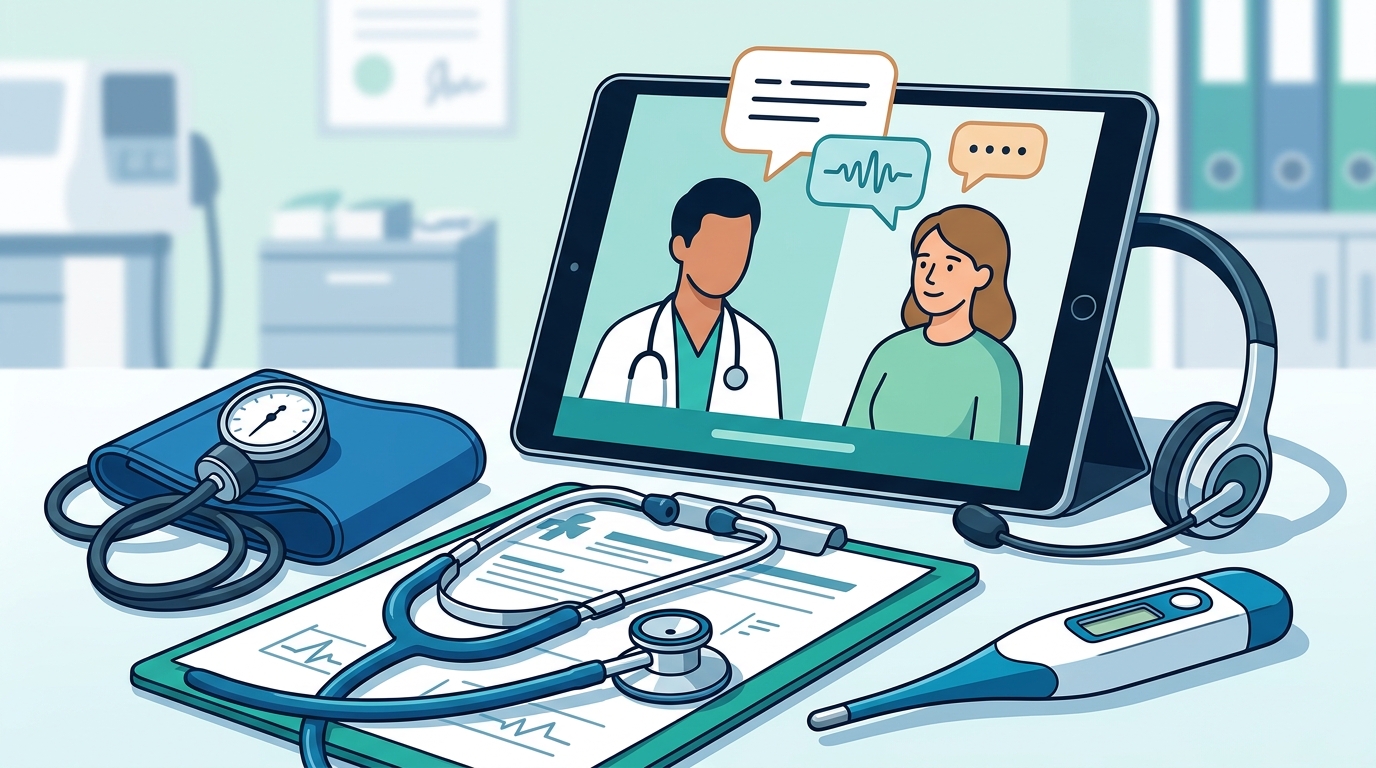
Healthcare workers need to communicate clearly and empathetically with patients who speak Spanish. The most effective way to practice is through consistent, real-time conversation with native speakers who can correct your pronunciation and grammar on the spot. Apps and textbooks provide vocabulary, but they cannot replicate the dynamic, high-stakes interactions of a clinical setting. Pura Buena Onda offers online conversational classes designed to help you build the confidence needed for these professional exchanges.
Why Clinical Context Matters
Medical Spanish is not just about translating symptoms; it is about building trust. A patient who feels heard is more likely to follow treatment plans. In a clinical environment, you must navigate complex terminology while maintaining a warm, professional tone. This requires a level of fluency that goes beyond basic greetings. You need to be able to explain procedures, ask about pain levels, and discuss lifestyle factors with nuance.
Traditional language courses often focus on general topics like shopping or travel. While these are useful, they do not prepare you for the specific pressures of a healthcare facility. You need practice in scenarios where clarity is critical. Misunderstanding a dosage or a symptom can have serious consequences. Therefore, your practice must be tailored to the specific demands of your role, whether you are a nurse, a doctor, or an administrative staff member.
Pura Buena Onda has been creating a relaxed, non-judgmental environment for 19 years. Our approach focuses on real conversations rather than rote memorization. We understand that healthcare professionals have busy schedules, so we offer flexible online classes that fit into your life. By practicing in a low-stress environment, you can build the muscle memory needed for high-stress clinical situations.
The Power of Active Speaking Practice
Passive learning, such as watching videos or listening to audio, is a useful supplement but not a replacement for active production. You cannot learn to swim by reading about water. Similarly, you cannot learn to speak Spanish by only consuming content. You must produce the language. This means speaking, making mistakes, and receiving immediate feedback. The brain learns language through use, not just exposure.
In a small-group setting of up to 6 students, each student gets plenty of speaking practice in every class. This ensures that you are not just listening to others but are actively engaging in the conversation. The group format also allows you to see how other learners handle similar challenges. You can observe different strategies for expressing complex ideas and adapt them to your own style.
Feedback is a critical component of this process. When you make a grammatical error or use an awkward phrase, a native speaker can correct you in real time. This immediate correction helps you internalize the correct structure. Over time, these corrections become automatic, allowing you to speak more naturally and confidently. This is the core of the conversational approach that Pura Buena Onda uses in its classes.
Tailoring Practice to Your Role
Different roles in healthcare require different language skills. A doctor needs to explain diagnoses and treatment options clearly. A nurse needs to provide instructions for care and monitor patient comfort. An administrative staff member needs to handle scheduling and insurance questions. Each of these roles has its own set of common phrases and terminology. Your practice should reflect the specific needs of your job.
For example, if you are a nurse, you might focus on phrases related to pain management, medication administration, and daily care routines. If you are a doctor, you might focus on explaining complex medical conditions in simple terms. By tailoring your practice to your role, you can become more efficient and effective in your work. This targeted approach ensures that you are spending your time on the skills that matter most to you.
Pura Buena Onda offers private and semi-private classes that can be structured to fit your specific needs. In a private session, you can focus entirely on your role and your goals. In a semi-private session, you can practice with a colleague or a partner who shares your professional background. This allows you to discuss work-related topics in a supportive environment. You can also request a schedule that fits your availability, ensuring that you can practice consistently without disrupting your work life.
Building Consistency and Confidence
Language learning is highly individual. Progress depends on consistency, exposure, and practice. There is no shortcut to fluency. However, you can accelerate your progress by practicing regularly. Even short, frequent sessions are more effective than long, infrequent ones. Consistency helps you maintain your momentum and build confidence over time. It also helps you retain the vocabulary and structures you have learned.
Confidence is built through success. When you successfully communicate with a patient, you feel a sense of accomplishment. This positive reinforcement encourages you to keep practicing. Over time, you will find that you are less afraid of making mistakes. You will start to see mistakes as a natural part of the learning process rather than a source of embarrassment. This shift in mindset is crucial for long-term success.
At Pura Buena Onda, we emphasize the importance of consistency. We offer auto-renewing class memberships that allow you to commit to a regular practice schedule. This structure helps you stay on track and avoid the common pitfall of losing motivation. We also provide supplementary video resources on our Patreon page, which you can use to review concepts between classes. These resources are extra material to support your learning, not a replacement for live conversation.
Getting Started with Pura Buena Onda
Starting your Spanish practice journey is simple. First, you need to assess your current level. If you are a total beginner, you can start with our beginner classes. No prior Spanish knowledge is required. If you have some experience, we can help you find the right level for you. We offer 8 different levels, so you will not be stuck with students who are far ahead or behind you.
Next, you need to choose a class format that fits your needs. Small-group classes are collaborative and conversation-focused. They are a great way to practice with peers and get feedback from a teacher. Private classes offer a more personalized experience, where you can focus on your specific goals. Semi-private classes are a good option if you want to practice with a partner. You can choose the format that works best for you and your schedule.
Key Takeaways
- Active speaking practice with native speakers is essential for developing clinical communication skills.
- Traditional language courses often lack the specific context needed for healthcare settings.
- Small-group classes provide frequent speaking opportunities and real-time feedback.
- Private and semi-private classes allow for personalized practice tailored to your specific role.
- Consistency is key to building confidence and fluency over time.
- Pura Buena Onda offers flexible, online classes that fit into busy professional schedules.
- Supplementary video resources can support your learning between live classes.
Frequently Asked Questions
Do I need prior Spanish knowledge to start?
No, you do not need any prior Spanish knowledge to start. We offer beginner classes that are designed for total beginners. You can start from scratch and build your skills from the ground up.
Are the classes online or in-person?
All of our classes are 100% online. You can join from anywhere in the world, as long as you have a stable internet connection and a device with a microphone and camera.
How many students are in a small-group class?
Small-group classes have up to 6 students. This size ensures that each student gets plenty of speaking time and individual attention from the teacher.
Can I customize my classes to focus on medical Spanish?
Yes, in private and semi-private classes, we can structure the lessons to focus on topics relevant to your role in healthcare. You can discuss specific scenarios and terminology that you encounter in your work.
How often should I attend classes?
Consistency is more important than frequency. We recommend attending classes at least once a week, but more frequent practice will help you progress faster. You can choose a membership that fits your schedule and budget.
What if I miss a class?
You can reschedule your class up to 24 hours in advance without penalty. If you miss a class, you can book a make-up session, subject to availability. We understand that work schedules can be unpredictable, so we offer flexible scheduling options.
Do you offer any resources between classes?
Yes, we offer supplementary video resources on our Patreon page. These are extra materials that you can use to review concepts and practice listening between live classes. They are not a replacement for live conversation, but they can be a helpful supplement.