
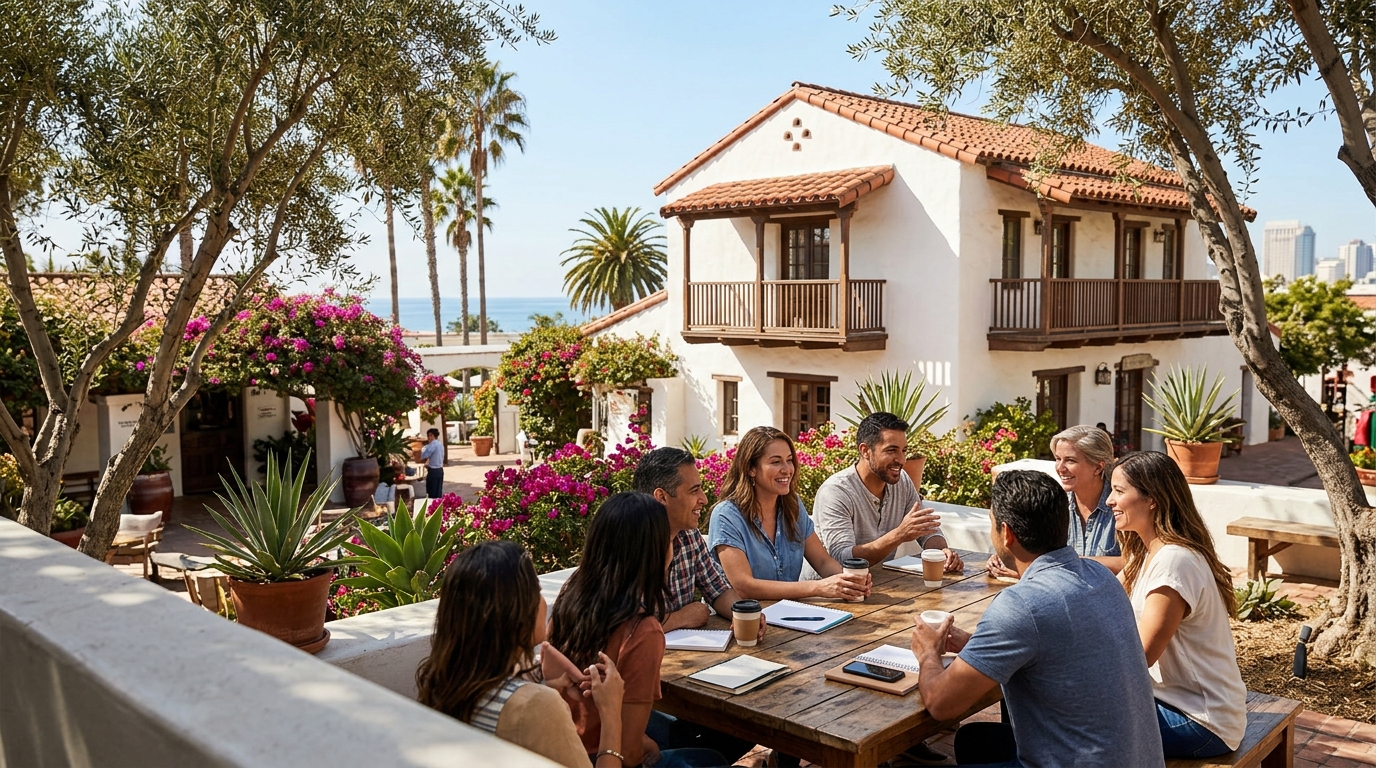
San Diego sits right on the US-Mexico border, making it one of the best cities in the country for learning Spanish. But with so many options available, choosing the right Spanish language school can feel overwhelming. Whether you want to connect with Spanish-speaking family members, prepare for travel, or simply expand your horizons, the school you pick will shape your entire learning experience. This guide walks you through the most important factors to consider so you can make a confident, informed decision and start speaking sooner.
Teaching Methodology and Conversational Focus
Teaching methodology is how a school structures its curriculum and delivers instruction. Not every approach works for every learner. Some schools lean heavily on grammar drills and textbook exercises, while others prioritize real conversation from day one.
A communicative approach is widely regarded as one of the most effective methods for adult language learners. It emphasizes using the language in meaningful contexts rather than memorizing rules in isolation. Look for a school that gets you speaking early and often.
At Pura Buena Onda, the philosophy is built around throwing textbooks out the window and developing real communication skills through guided conversation with experienced teachers. This focus on practical, spoken Spanish helps students build confidence faster than traditional classroom methods.
Class Size and Student-Teacher Ratio
Class size is the number of students in a single session, and it directly impacts how much speaking practice you get. In a class of 20 or 30 students, you might speak for only a few minutes per session. That is not enough to build fluency.
Why Small Groups Win
Research consistently shows that smaller classes provide more personalized attention and more opportunities to speak. Look for schools that cap group classes at around 3 to 6 students. At Pura Buena Onda, small-group Spanish classes hold a maximum of 6 students in 90-minute sessions, giving each person meaningful time to practice.
Private and Semi-Private Options
If your schedule or learning goals demand even more individual attention, check whether the school offers private lessons or semi-private classes. These formats allow teachers to tailor every session to your specific weaknesses and goals.
Teacher Qualifications and Experience
The quality of your teachers is arguably the single biggest factor in your success. A teacher qualification refers to the formal education, certifications, and native-level fluency that an instructor brings to the classroom.
Great Spanish teachers should be native speakers with experience teaching Spanish as a second language. They should provide real-time corrections, guide you toward natural-sounding speech, and make the learning process enjoyable. You can often get a sense of a school's teaching team by visiting their instructor profiles before enrolling.
According to language education experts, teachers trained in ACTFL-aligned methods tend to produce stronger learning outcomes because they focus on proficiency rather than rote memorization.
Scheduling Flexibility and Commitment Options
Life is busy. The best Spanish school for you is one that fits your schedule, not the other way around. Before signing up, ask about class times, cancellation policies, and contract requirements.
Some schools lock students into long-term contracts. Others, like Pura Buena Onda, operate on a month-to-month membership with no contracts. This lets you learn at your own pace without financial pressure. Classes run six days a week, from early morning to evening, in Pacific Time.
Online vs. In-Person
The rise of virtual learning has made geography less of a barrier. Many San Diego-based schools now offer online Spanish classes, which means you can learn from anywhere while still benefiting from a local school's teaching expertise and community.
Learning Environment and Community
A learning environment is the social and emotional atmosphere in which instruction takes place. A welcoming, low-pressure space encourages risk-taking, which is essential for language acquisition.
Look for a school where making mistakes is celebrated, not penalized. Pura Buena Onda has spent over 17 years creating a relaxed, fun, and non-judgmental atmosphere for adult learners. Students often compare classes to happy hour with friends, where laughter, honest conversation, and genuine connection drive the learning process.
Community events, speaking challenges, and extra resources like monthly Spanish challenges are signs that a school is invested in your growth beyond the classroom walls.
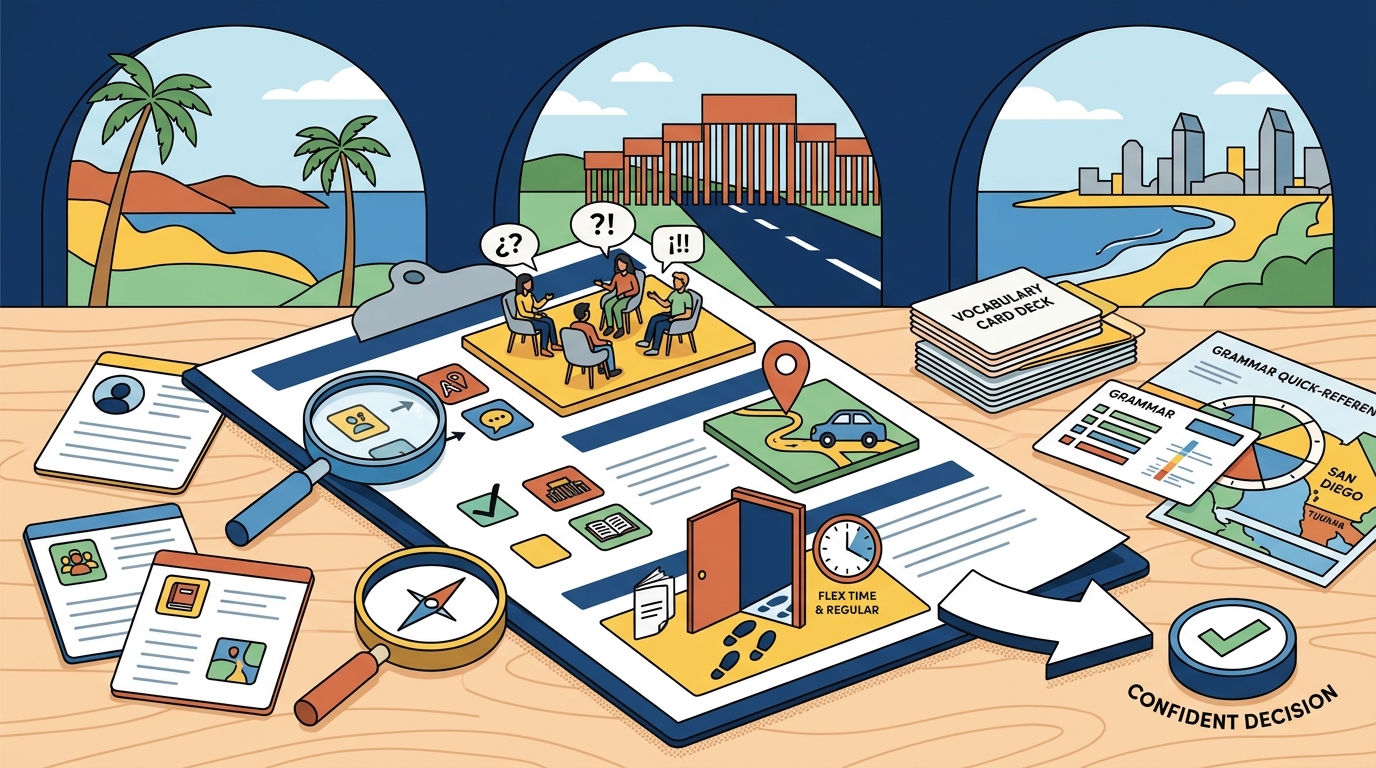
Comparing Key Factors at a Glance
| Factor | What to Look For | Red Flag |
|---|---|---|
| Teaching Method | Conversational, communicative approach | Grammar-only or translation-heavy curriculum |
| Class Size | 3 to 6 students per group | 15+ students with little speaking time |
| Teacher Quality | Native speakers with teaching credentials | Untrained instructors or non-native speakers |
| Scheduling | Flexible hours, multiple days per week | Rigid schedule with limited options |
| Contracts | Month-to-month, cancel anytime | Long-term contracts with penalties |
| Community | Events, challenges, and supportive culture | No interaction outside of class |
| Assessment | Placement evaluations to match your level | One-size-fits-all placement |
Key Takeaways
- Prioritize schools that use a conversational, communicative teaching methodology over grammar-only approaches.
- Small class sizes of 3 to 6 students give you significantly more speaking practice per session.
- Native-speaking teachers with formal training produce measurably better outcomes for adult learners.
- Flexible, month-to-month commitments reduce risk and let you learn at your own pace.
- A supportive, non-judgmental learning environment is critical for building speaking confidence.
- Online class availability expands your options beyond geographic limitations.
- Comprehensive placement assessments ensure you start at the right level from day one.
Frequently Asked Questions
What is the most important factor when choosing a Spanish language school?
Teaching methodology matters most. A school that prioritizes speaking and real-world conversation from the start will help you build fluency faster than one focused solely on grammar exercises.
How many students should be in a Spanish class?
Ideally, group classes should have no more than 6 students. This ensures everyone gets enough speaking time and personalized feedback from the instructor.
Do I need to know any Spanish before enrolling?
No. Quality schools offer classes for complete beginners through advanced speakers. Many also provide placement assessments so you can start at the level that matches your current ability.
Are online Spanish classes as effective as in-person ones?
Yes, when taught by experienced instructors in small groups. Online classes offer the added benefits of convenience, flexible scheduling, and the ability to learn from anywhere.
How long does it take to become conversational in Spanish?
According to the U.S. Foreign Service Institute, Spanish requires roughly 600 to 750 classroom hours for English speakers to reach professional proficiency. Consistent practice and a conversation-focused school can accelerate this timeline.
Should I choose a school with native Spanish-speaking teachers?
Absolutely. Native speakers provide authentic pronunciation, natural phrasing, and cultural context that non-native instructors often cannot replicate.
What questions should I ask a Spanish school before enrolling?
Ask about class sizes, teacher qualifications, cancellation policies, placement testing, and what percentage of class time is spent speaking versus listening to lectures. A transparent school will answer these confidently.
Why is San Diego a great city for learning Spanish?
San Diego's proximity to Mexico, its large Spanish-speaking population, and its thriving language education community create abundant opportunities to practice Spanish both inside and outside the classroom.
Ready to Start Speaking Spanish?
If you are looking for a Spanish school in San Diego that puts conversation first, offers flexible scheduling, and feels more like happy hour than homework, reach out to Pura Buena Onda today. With over 17 years of experience helping adults speak Spanish with confidence, PBO makes it easy to get started. No contracts, no pressure, just pura buena onda.