

Research indicates that the average language learner spends over 1,000 hours studying before achieving conversational fluency, yet most fail because they focus on grammar drills rather than active output according to FSI data. Traditional classroom settings often create high-anxiety barriers that inhibit natural speech production. To overcome this, learners must seek environments that prioritize organic interaction over academic perfection. This guide outlines how to find or create a low-stress space for Spanish practice, leveraging community-based learning and structured immersion.
Why Relaxed Learning Matters
Language acquisition is deeply tied to emotional state. When learners feel judged or pressured, their cognitive ability to process new linguistic input decreases significantly. According to the American Psychological Association, stress triggers the amygdala, which can block access to the language centers of the brain. This is why many students who have studied Spanish for years still struggle to order a coffee in a native-speaking country.
Conversely, a relaxed environment lowers the "affective filter," allowing information to pass more freely into long-term memory. Pura Buena Onda has operated for 17 years on the principle that learning should feel like hanging out with friends rather than sitting through a lecture. This approach ensures that students are not just memorizing vocabulary lists but are actually producing the language in real-time contexts.
Spanish is a language of connection. It is not merely a subject to be studied but a tool to be used. By removing the fear of making mistakes, learners can focus on communication rather than perfection. This shift in mindset is critical for anyone looking to move from passive understanding to active fluency.
Small-Group Immersion Classes
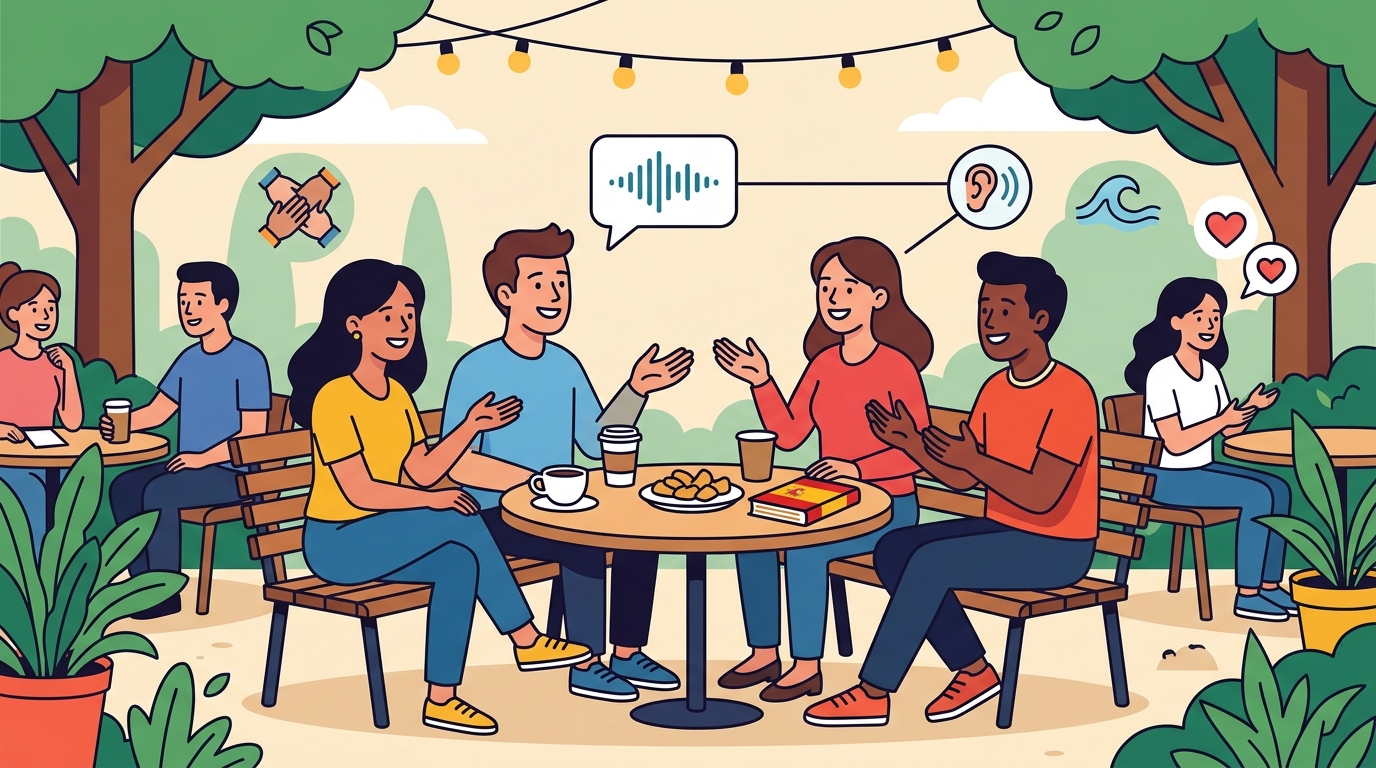
Small-group classes offer the perfect balance of social interaction and individual attention. These sessions typically involve three to six students, allowing for ample speaking time for each participant. In a group of this size, it is impossible to hide. Everyone is encouraged to contribute, which builds confidence over time.
These classes are designed for all levels, from absolute beginners to advanced speakers. The curriculum focuses on real-life scenarios, such as discussing travel plans, navigating social situations, or understanding cultural nuances. This ensures that the language learned is immediately applicable to daily life.
The instructor plays a crucial role in maintaining a supportive atmosphere. They provide real-time corrections and guide conversations to ensure that everyone stays engaged. This structure prevents the common pitfall of group classes devolving into monologues by a few dominant speakers.
Flexibility is another key benefit. With multiple class options each week, students can join sessions that fit their schedules. This adaptability is essential for maintaining consistency, which is the cornerstone of language learning.
Semi-Private Conversation Sessions
For those who prefer a more intimate setting, semi-private classes offer a two-person dynamic. This format is ideal for friends, couples, or colleagues who want to learn together. The reduced group size allows for even more personalized attention and faster progress.
Semi-private sessions are particularly effective for practicing specific conversational skills. Whether you need to prepare for a business meeting in Mexico City or a family gathering in Spain, the instructor can tailor the content to your specific needs. This targeted approach maximizes the value of every minute spent in class.
The cost per hour is often more affordable than private tutoring while still offering a high degree of customization. Students benefit from the accountability of having a partner, which can help maintain motivation and commitment to the learning process.
Additionally, the social aspect of learning with one other person can reduce anxiety. It feels less like a performance and more like a natural conversation. This dynamic helps students become comfortable with the rhythm and flow of Spanish speech.
Daily Practice Challenges
Beyond formal classes, daily practice is essential for maintaining momentum. The "30 for 30 in 30" challenge is a structured program designed to help learners integrate Spanish into their daily routines. This challenge involves completing 30 diverse tasks over 30 days, with each task taking approximately 30 minutes.
The tasks are designed to be engaging and varied, covering listening, reading, writing, and speaking. This variety prevents boredom and ensures a well-rounded practice regimen. The challenge is open to all levels, with beginner-friendly modifications provided for every task.
Community support is a key component of this challenge. Participants can join a WhatsApp group to share voice notes, videos, and progress updates. This social accountability helps learners stay motivated and connected to the broader language learning community.
The flexibility of the challenge allows participants to swap tasks if a particular day does not fit their schedule. This adaptability ensures that learners can maintain consistency without feeling overwhelmed. The goal is to make Spanish a natural part of daily life, much like a morning coffee routine.
Choosing the Right Format
Selecting the right learning format depends on individual goals, budget, and personality. The table below summarizes the key differences between the primary options available.
| Format | Group Size | Duration | Best For | Link |
|---|---|---|---|---|
| Small-Group Class | 3-6 Students | 90 Minutes | Social learners seeking community | View Details |
| Semi-Private Class | 2 Students | 60 Minutes | Targeted practice with a partner | View Details |
| Private Class | 1 Student | 60 Minutes | Maximum flexibility and customization | View Details |
| 30-for-30 Challenge | Self-Paced | 30 Days | Building daily habits and consistency | View Details |
When evaluating these options, consider your current proficiency level and your primary motivation for learning. If you struggle with anxiety, starting with a small-group class or the semi-private option may be more comfortable. If you need strict accountability, the daily challenge or private classes might be more effective.
It is also important to consider the instructor's teaching style. A relaxed, humorous approach can significantly reduce stress and make learning more enjoyable. Look for programs that emphasize conversation and cultural context over rote memorization.
Key Takeaways
- Stress Blocks Fluency: High anxiety inhibits language production, making relaxed environments essential for progress.
- Community Supports Growth: Learning with others reduces isolation and provides natural accountability.
- Consistency is Key: Daily practice, even in small doses, is more effective than sporadic intensive study.
- Real-Life Context Matters: Focusing on practical conversations accelerates the path to functional fluency.
- Flexibility Ensures Retention: Adaptable schedules help learners maintain their routine despite life's demands.
- Professional Guidance Helps: Experienced instructors provide necessary corrections and cultural insights.
- 17 Years of Expertise: Pura Buena Onda has refined this method over nearly two decades of operation.
Frequently Asked Questions
Do I need to be a native speaker to join?
No, the classes are designed for learners of all levels. The focus is on communication and cultural exchange, not native-level perfection.
What if I miss a class?
Flexibility is built into the schedule. You can join another session that week or use the online resources to stay on track.
Is the 30-for-30 challenge suitable for beginners?
Yes, beginner-friendly modifications are provided for every task to ensure everyone can participate successfully.
How do I sign up for a class?
You can sign up directly through the website or by contacting the administration for a free consultation.
Are the classes online or in-person?
Conversation classes are held online via Zoom, while social events may be in-person in San Diego or online.
What is the cost of the Patreon challenge?
The Patreon membership is $19 per month and auto-renews until canceled.
Can I cancel my membership anytime?
Yes, you can cancel your Patreon membership with one click at any time.
Start Speaking Today
Stop waiting for the perfect moment to start speaking Spanish. The best time is now. Join a community that values connection over perfection and experience the joy of real conversation. Schedule a free phone consult today to find the perfect learning path for your needs.