

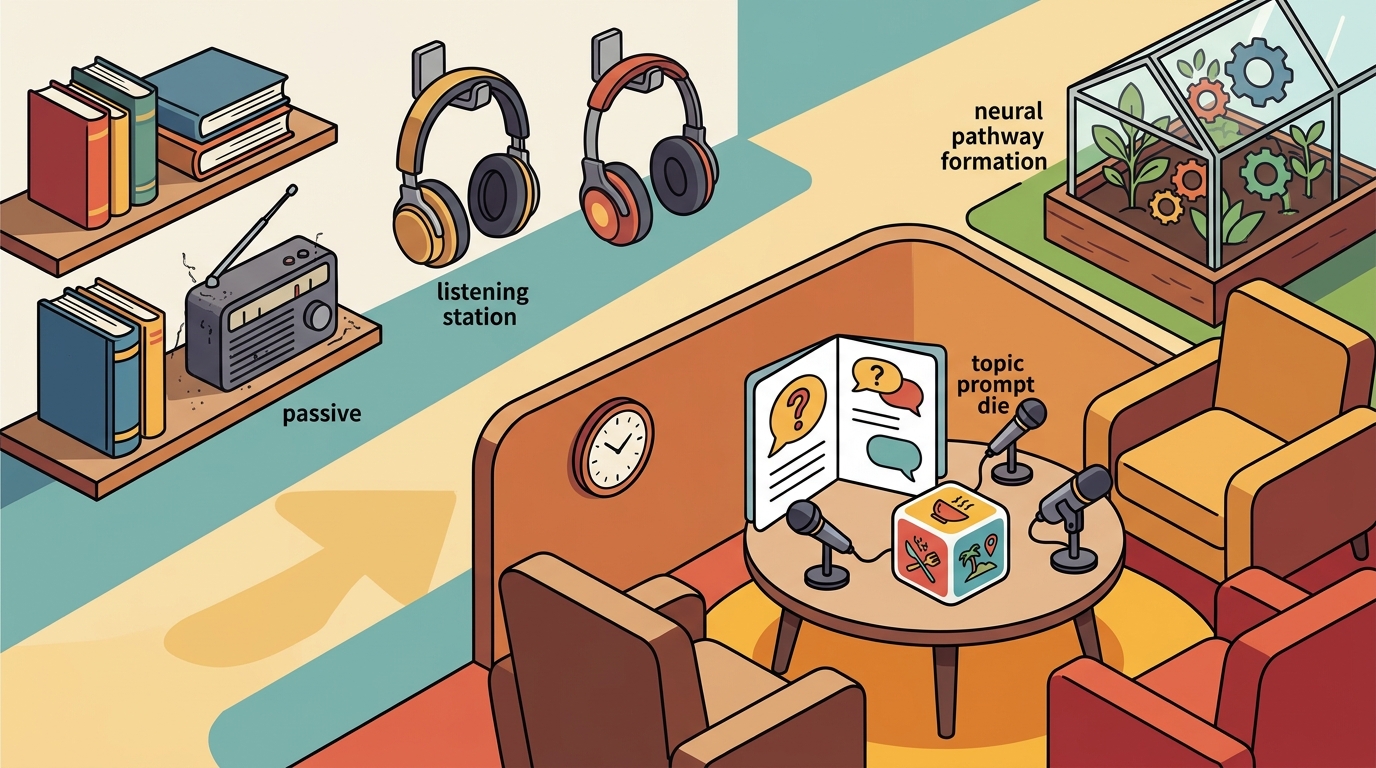
Learning a language through passive consumption rarely yields fluency. According to recent linguistic studies on second language acquisition, active production is the primary driver of neural pathway formation for speech. Data shows that students who engage in real-time conversation retain vocabulary significantly faster than those relying solely on textbook drills. This article outlines how to transition from passive learning to active, low-stress speaking practice.
Why a Relaxed Environment Matters
Most language learners hit a wall known as the "affective filter." This psychological barrier rises when anxiety is high, blocking the brain from processing and producing new information. A relaxed environment lowers this filter, allowing you to experiment with language without the paralyzing fear of judgment.
Traditional classroom settings often prioritize grammar accuracy over communication. This approach can lead to hesitation and silence. In contrast, a conversational approach prioritizes flow and connection. When you feel safe, your brain focuses on meaning rather than mechanics. This shift is critical for developing the muscle memory required for spontaneous speech.
Research indicates that stress hormones like cortisol inhibit the prefrontal cortex, the area responsible for complex language processing. By removing the pressure to be perfect, you create a space where learning can actually occur. This is the core philosophy behind modern immersion techniques.
Choosing the Right Class Format
Not all speaking opportunities are created equal. The structure of your practice session dictates your comfort level and the speed of your progress. You must select a format that aligns with your current confidence level and schedule.
Small-Group Immersion
Small groups offer the best balance of social interaction and individual attention. With fewer participants, everyone gets more speaking time. This format mimics a social gathering, making it feel less like a lesson and more like a hangout. You learn by listening to others and correcting your own output in real-time.
Semi-Private Sessions
If you need more direct feedback, semi-private classes are ideal. These sessions allow for deeper dives into specific topics. You can focus on your unique pronunciation issues or grammar gaps without the distraction of a larger crowd. The dynamic is more intimate, fostering quicker bonds between participants.
One-on-One Tutoring
Private lessons provide the highest level of customization. Your instructor can tailor every minute to your specific goals. This is the fastest route to fluency if you have a tight deadline or specific professional needs. However, it lacks the unpredictability of group conversation, which is essential for real-world readiness.
Building Sustainable Speaking Habits
Consistency beats intensity in language learning. Trying to cram ten hours of study into one weekend yields poor results compared to thirty minutes of daily practice. The brain requires frequent, spaced repetition to move vocabulary from short-term to long-term memory.
Integrate Spanish into your daily routine. Listen to podcasts during your commute. Narrate your actions while cooking. These small wins build momentum. When you are ready for structured practice, join a community that supports daily engagement.
Consider joining a challenge program. These initiatives provide a structured path for thirty days, helping you build a routine without the pressure of perfection. The goal is to make Spanish a natural part of your life, not a chore.
Overcoming the Fear of Mistakes
Mistakes are not failures; they are data points. Every error provides feedback on what you need to adjust. In a supportive environment, mistakes are celebrated as proof of effort. This mindset shift is crucial for long-term success.
Native speakers appreciate the effort of learners. They are rarely judging your grammar; they are listening to your message. When you stop worrying about being perfect, you start communicating. This is the essence of conversational fluency.
Practice active listening. Pay attention to how others phrase their thoughts. Mimic their intonation and rhythm. This shadowing technique helps you internalize the natural flow of the language. Over time, your speech will become more fluid and less robotic.
Comparing Learning Options
Understanding the differences between various learning methods helps you make an informed decision. Below is a comparison of common approaches to speaking practice.
| Method | Speaking Time | Cost Efficiency | Social Interaction | Best For |
|---|---|---|---|---|
| Small-Group Classes | High | Medium | High | Social learners |
| Semi-Private | Very High | Medium | Medium | Targeted feedback |
| Private Lessons | Maximum | Low | Low | Fast progress |
| Self-Paced Challenges | Variable | High | Optional | Building habits |
Key Takeaways
- Active production is the primary driver of fluency, surpassing passive study methods.
- A relaxed environment lowers the affective filter, allowing for better information processing.
- Small-group classes offer a balance of social interaction and individual speaking time.
- Consistency is more important than intensity; daily practice yields better results than cramming.
- Mistakes are essential data points for learning and should be embraced, not feared.
- Private lessons provide the fastest progress but lack the social dynamics of group settings.
- Structured challenges help build sustainable daily habits without overwhelming pressure.
Frequently Asked Questions
How long does it take to become comfortable speaking Spanish?
Comfort levels vary by individual. However, students who practice consistently in a supportive environment often report feeling more confident within three to six months. The key is regular exposure and low-stakes practice.
Do I need to be fluent to join a group class?
No. Classes are designed for all levels. Instructors provide modifications for beginners. You will learn alongside others at your level, ensuring the content is relevant and accessible.
What is the difference between online and in-person classes?
Online classes offer flexibility and convenience, allowing you to learn from anywhere. In-person classes provide a more immersive social experience. Both formats prioritize conversation and active speaking.
Can I cancel my subscription if I miss a class?
Most flexible programs allow you to skip classes without penalty. You can join different sessions that fit your schedule. This flexibility is crucial for maintaining a consistent practice routine despite life's demands.
Is it better to learn alone or with others?
While self-study builds vocabulary, speaking with others builds fluency. Language is a social tool. Practicing with humans provides immediate feedback and emotional connection that apps cannot replicate.
How do I find a non-judgmental learning community?
Look for programs that explicitly state their focus on conversation and fun. Read reviews from past students. A good community will welcome mistakes and encourage participation rather than demanding perfection.
What resources are available for daily practice?
Beyond classes, you can use language apps, podcasts, and social media groups. Joining a challenge program can also provide structure and daily tasks to keep your skills sharp.
Start Your Journey
Stop waiting for the perfect moment. The best time to start speaking is now. Join a community that values your progress over perfection. Schedule a free consultation today to find the right class for your needs. Let’s get the conversation started.