

Beyond Duolingo: Criteria for Selecting the Best Spanish Learning Platform
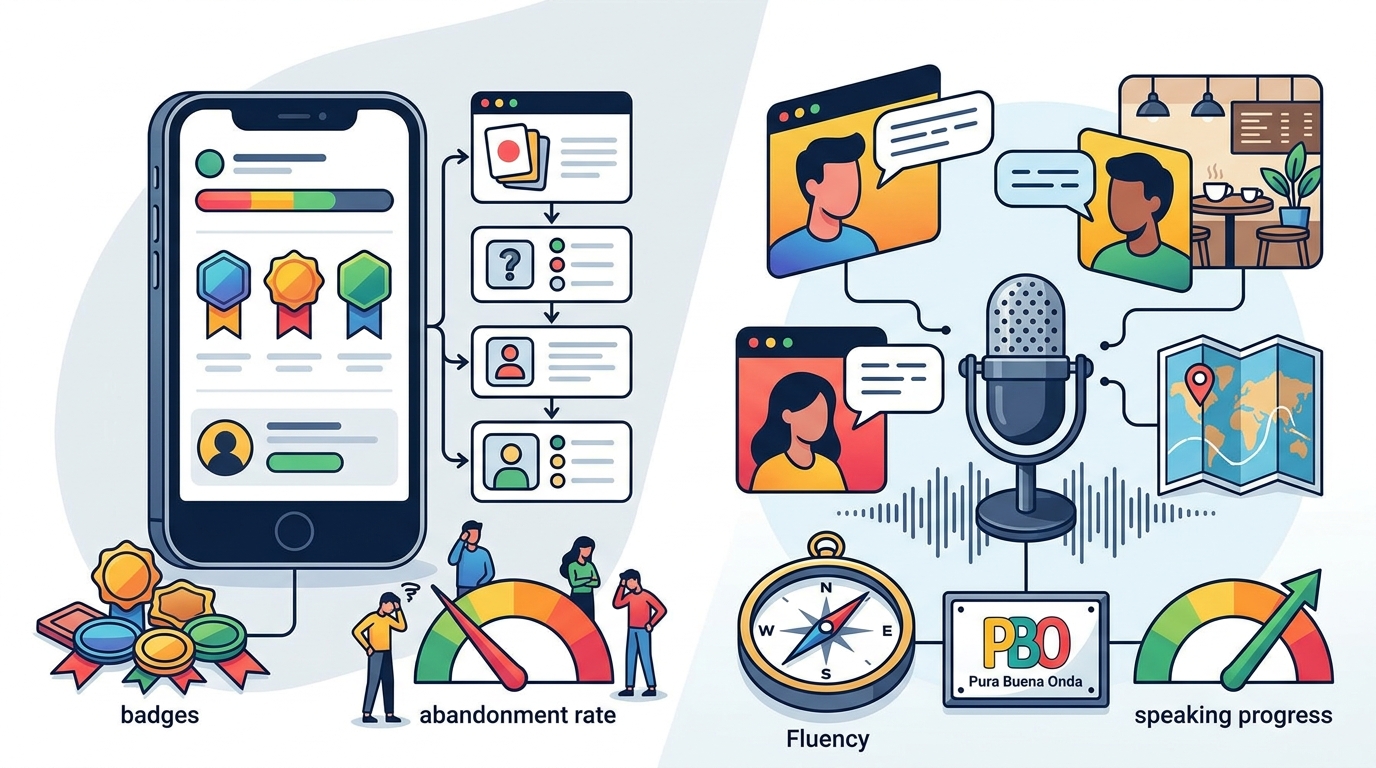
Traditional language acquisition models are rapidly shifting away from isolated vocabulary drills toward immersive, conversational practice. Recent industry data indicates that over 60% of adult learners abandon language apps within the first three months due to a lack of tangible speaking progress. This retention crisis highlights a critical gap in the market for platforms that prioritize real-world communication over gamified repetition. If you are seeking fluency rather than just app completion badges, understanding the specific criteria for evaluation is essential.
Why Duolingo Falls Short for Fluency
Duolingo revolutionized language learning by making it accessible and gamified. However, its core mechanic relies heavily on translation exercises and pattern recognition rather than active production. While it is excellent for building initial vocabulary, it often fails to prepare learners for spontaneous conversation. The platform’s algorithm prioritizes streak maintenance over linguistic depth, leading to a false sense of competence.
Many users report that after years of daily use, they can still not hold a basic conversation with a native speaker. This phenomenon is known as the "passive knowledge gap." To bridge this gap, learners must transition to platforms that demand active output. The best Spanish learning platform for you will be one that forces you to speak, listen, and react in real-time, rather than simply selecting the correct multiple-choice answer.
Criteria 1: Conversational Focus vs. Grammar Drills
The most significant differentiator between effective platforms and mediocre ones is the emphasis on conversation. Fluency is a motor skill, not just an intellectual one. Just as you cannot learn to play tennis by reading a book, you cannot learn to speak Spanish by memorizing verb conjugations in isolation.
When evaluating options, look for platforms that integrate comprehensible input with immediate output opportunities. This means the platform should provide context-rich audio and video from native speakers, followed by exercises that require you to use that language in a meaningful way. Avoid platforms that treat grammar as a series of disconnected rules. Instead, seek environments where grammar is learned inductively through usage.
For example, Pura Buena Onda operates on the principle that language acquisition happens through interaction, not instruction. Their approach mirrors how children learn their first language, focusing on meaning and connection before perfect syntax. This method ensures that learners develop an intuitive feel for the language rather than a rigid, textbook-based understanding.
Criteria 2: The Necessity of Human Feedback
AI and automated speech recognition have improved significantly, but they still lack the nuance to correct subtle pronunciation errors or cultural context mistakes. Real-time correction from a native speaker is irreplaceable. A human teacher can identify when you are sounding unnatural and provide immediate, personalized feedback.
Consider the difference between talking to a chatbot and talking to a person. A chatbot will accept grammatically correct but contextually awkward sentences. A human teacher will guide you toward more natural phrasing. This distinction is crucial for achieving native-like fluency. Platforms that offer live classes with native speakers provide this critical layer of feedback.
Furthermore, human interaction allows for the exploration of cultural nuances. Language is deeply tied to culture. Learning from native speakers from different regions, such as Spain, Mexico, or Colombia, exposes you to diverse accents and idioms. This exposure is vital for understanding Spanish in a global context. It prevents you from sounding like a textbook when you travel or interact with diverse groups.
Criteria 3: Flexibility and Access Models
Adult learners often struggle with scheduling consistency. The best platform for you must accommodate your lifestyle, not the other way around. Look for platforms that offer flexible scheduling, such as drop-in classes or on-demand content. Rigid subscription models that lock you into specific times can lead to burnout and dropout.
Online learning has democratized access to high-quality instruction. Platforms that utilize Zoom or similar technologies allow you to learn from anywhere. This flexibility is particularly important for those living in areas without local Spanish immersion opportunities. It also allows for a more comfortable learning environment, reducing the anxiety associated with speaking in front of others.
Additionally, consider the cost structure. Some platforms offer monthly memberships with no long-term contracts. This model is ideal for learners who want to test the waters without a heavy financial commitment. Others may offer bootcamps or intensive courses for those who want a structured, short-term boost. Evaluate your learning goals to determine which model fits your needs.
Criteria 4: Community and Accountability
Learning a language is a marathon, not a sprint. Community support plays a pivotal role in maintaining motivation. Platforms that foster a sense of belonging among students can significantly improve retention rates. Look for features like social clubs, group challenges, or peer-to-peer interaction spaces.
Accountability is another key factor. Platforms that incorporate daily tasks or weekly check-ins help learners stay on track. For instance, a 90-day bootcamp model might require daily engagement with content and weekly attendance at live sessions. This structure creates a habit loop that reinforces learning. It transforms language study from a chore into a daily routine.
Social events, whether in-person or virtual, also strengthen community bonds. These events provide low-pressure opportunities to practice speaking skills. They allow learners to build friendships and network with others who share similar goals. This social aspect makes the learning process more enjoyable and sustainable.
Comparing Learning Models
Understanding the different types of Spanish learning platforms can help you make a more informed decision. Below is a comparison of common models to illustrate their strengths and weaknesses.
| Platform Type | Primary Focus | Best For | Limitations |
|---|---|---|---|
| App-Based (e.g., Duolingo) | Vocabulary & Grammar Drills | Beginners seeking casual exposure | Lacks speaking practice and human feedback |
| Live Online Classes | Conversational Practice | Intermediate learners seeking fluency | Requires scheduling and active participation |
| Private Tutoring | Personalized Curriculum | Advanced learners with specific goals | Higher cost per hour |
| Immersion Bootcamps | Intensive Daily Practice | Accelerated learners needing structure | Time-intensive and demanding |
As shown in the table, each model serves a different purpose. For most adults aiming for conversational fluency, a combination of live classes and supplementary app use is often the most effective strategy. Pure app usage rarely leads to speaking confidence, while pure tutoring may lack the peer interaction needed for natural dialogue.
Key Takeaways
- Fluency requires output: Passive learning through apps is insufficient for speaking confidence.
- Human feedback is critical: Native speakers provide nuance and correction that AI cannot match.
- Community drives retention: Social accountability significantly reduces dropout rates.
- Flexibility ensures consistency: Drop-in or flexible scheduling helps maintain daily habits.
- Context matters: Learning from diverse native speakers broadens your understanding of the language.
- Structure aids progress: Bootcamps or structured courses can break through learning plateaus.
- Real-world application: Prioritize platforms that simulate real-life conversations.
Frequently Asked Questions
Is Duolingo enough to learn Spanish?
Duolingo is a good starting point for vocabulary but is generally not enough to achieve conversational fluency. It lacks the speaking practice and human feedback necessary for real-world application.
What is the most effective way to learn Spanish as an adult?
The most effective method combines live conversation practice with native speakers and consistent daily exposure. Immersion, whether through travel or online classes, accelerates learning significantly.
How long does it take to become fluent in Spanish?
Fluency timelines vary, but consistent daily practice with a focus on speaking can yield noticeable results in 3 to 6 months. Intensive bootcamps can accelerate this process further.
Can I learn Spanish entirely online?
Yes, online platforms like Zoom-based classes offer high-quality instruction and flexibility. Many learners achieve fluency without ever traveling to a Spanish-speaking country.
What is the difference between semi-private and private classes?
Semi-private classes involve small groups, offering peer interaction and lower costs. Private classes provide one-on-one attention and customized curricula but are more expensive.
Do I need to live in San Diego to join Pura Buena Onda?
No, Pura Buena Onda offers online classes via Zoom, making their services accessible to students worldwide. They also host in-person events in San Diego for local members.
What is the PBO 90-Day Bootcamp?
The PBO 90-Day Bootcamp is an intensive program combining daily tasks, weekly classes, and community challenges to help learners break through plateaus and build lasting habits.
Start Your Journey
Choosing the right platform is the first step toward Spanish fluency. Do not settle for apps that leave you silent. Seek out environments that challenge you to speak, connect you with native speakers, and support your progress. Pura Buena Onda offers a unique blend of live conversation classes, community support, and flexible learning options designed to help you achieve real fluency. Explore our Online Classes to find the perfect fit for your schedule. Join our 2026 Group Class Schedule to start practicing today. For those ready for a challenge, consider the 90-Day Spanish Bootcamp 2026. Visit our About Us page to learn more about our mission and methodology. Contact us via our Contact Page to schedule a free consultation.