

Most adult learners hit a frustrating plateau where they can read and write but freeze when trying to speak. According to recent language acquisition data, the primary barrier to fluency is not a lack of vocabulary but the inability to process grammar in real-time. This paralysis often stems from relying too heavily on textbook rules rather than immersive practice. At Pura Buena Onda, we have observed that breaking this cycle requires shifting from passive memorization to active, conversational engagement. This guide outlines the most frequent errors learners make and provides concrete methods to correct them immediately. (About Pura Buena Onda)
The Trap of False Friends and Cognates
One of the most embarrassing yet common mistakes involves "false friends" or falsos amigos. These are words that look identical or similar in English and Spanish but have completely different meanings. For example, the word "actual" in English does not mean "actual" in Spanish; it means "current" or "present". Using it incorrectly can lead to significant confusion in professional or casual settings.
Another frequent error is misusing cognates that end in "-tion" in English. These often end in "-ción" in Spanish, but the pronunciation shifts dramatically. Learners often pronounce the "c" as a hard "k" sound, which sounds unnatural to native speakers. To correct this, you must practice the soft "s" sound that Spanish uses for this suffix. Listening to native speakers on our YouTube channel helps you internalize these phonetic shifts without the pressure of immediate production.
False friends also extend to verbs. The verb "to assist" in English is not "asistir" in Spanish. "Asistir" means "to attend". If you say "Voy a asistir la reunión," you are saying "I am going to attend the meeting," not "assist" it. This distinction is critical for professional communication. Engaging in small-group classes allows you to test these boundaries in a low-stakes environment where teachers can gently correct these specific lexical errors.
Confusing Ser and Estar in Daily Contexts
The distinction between the two Spanish verbs for "to be" is a classic hurdle. Ser is used for permanent characteristics, identity, origin, and time. Estar is used for temporary states, locations, and ongoing actions. A common mistake is using ser for location. For instance, saying "Soy en la casa" is grammatically incorrect. The correct form is "Estoy en la casa."
Another frequent error involves describing emotions. While you might think your happiness is a permanent trait, in Spanish, emotions are considered temporary states. Therefore, you use estar. Saying "Soy feliz" implies you are a happy person by nature. Saying "Estoy feliz" means you are happy right now. This nuance is vital for expressing genuine, immediate feelings in conversation.
To master this, learners must understand the underlying logic rather than memorizing lists. Ser is about essence, while estar is about condition. Our Patreon community offers deep dives into these grammatical structures, providing context-rich examples that help you feel the difference. By analyzing native speaker interactions, you can begin to intuitively select the correct verb based on the context of the conversation.
Gender Agreement and Article Mismatches
Spanish is a gendered language, meaning every noun has a gender, typically masculine or feminine. A common mistake is ignoring gender agreement between nouns and their adjectives. For example, saying "una casa grande" is correct, but "un casa grande" is incorrect. The article "un" is masculine, while "casa" is feminine. This mismatch signals to native speakers that the speaker is still thinking in English structures.
Another frequent error involves the use of "un" vs "una" before nouns that start with a stressed "a" sound. For masculine nouns starting with this sound, such as "agua" (water), the article becomes "un" for phonetic ease, but the noun remains masculine. Saying "una agua" is a common mistake. The correct form is "un agua." This rule applies to other words like "hombre" (man) or "águila" (eagle).
Adjective placement also varies by gender and meaning. Some adjectives change meaning depending on their position. For example, "un hombre pobre" means a man with little money, while "un pobre hombre" means a pitiful man. Understanding these subtle shifts requires exposure to authentic content. Our online classes provide the necessary repetition and correction to help you internalize these agreements until they become automatic.
Pronunciation Pitfalls: R, L, and V
Pronunciation is often the first thing native speakers notice. The rolled "R" is notoriously difficult for English speakers. A common mistake is pronouncing it too softly, almost like a "D" sound. To correct this, you must practice the tip of your tongue against the roof of your mouth. This physical adjustment is difficult to master alone. In our semi-private classes, teachers provide real-time feedback on tongue placement, which is crucial for developing muscle memory.
The distinction between "L" and "R" is another significant barrier. In many English dialects, these sounds are similar. In Spanish, they are distinct. Mispronouncing "perro" (dog) as "pello" can lead to humorous misunderstandings. Listening to native speakers from different regions, such as those featured in our Patreon interviews, helps you hear the precise articulation required. Consistent daily practice is key to overcoming this phonetic hurdle.
The "V" and "B" sounds are also often confused. In Spanish, they are pronounced almost identically, with the lips lightly touching. English speakers often push the "V" sound, creating a buzzing noise that is not present in Spanish. Correcting this involves relaxing the lips and allowing air to pass through gently. This subtle adjustment makes your speech sound more natural and less accented. Engaging in daily conversation prompts on our Facebook page allows you to practice these sounds in a supportive community.
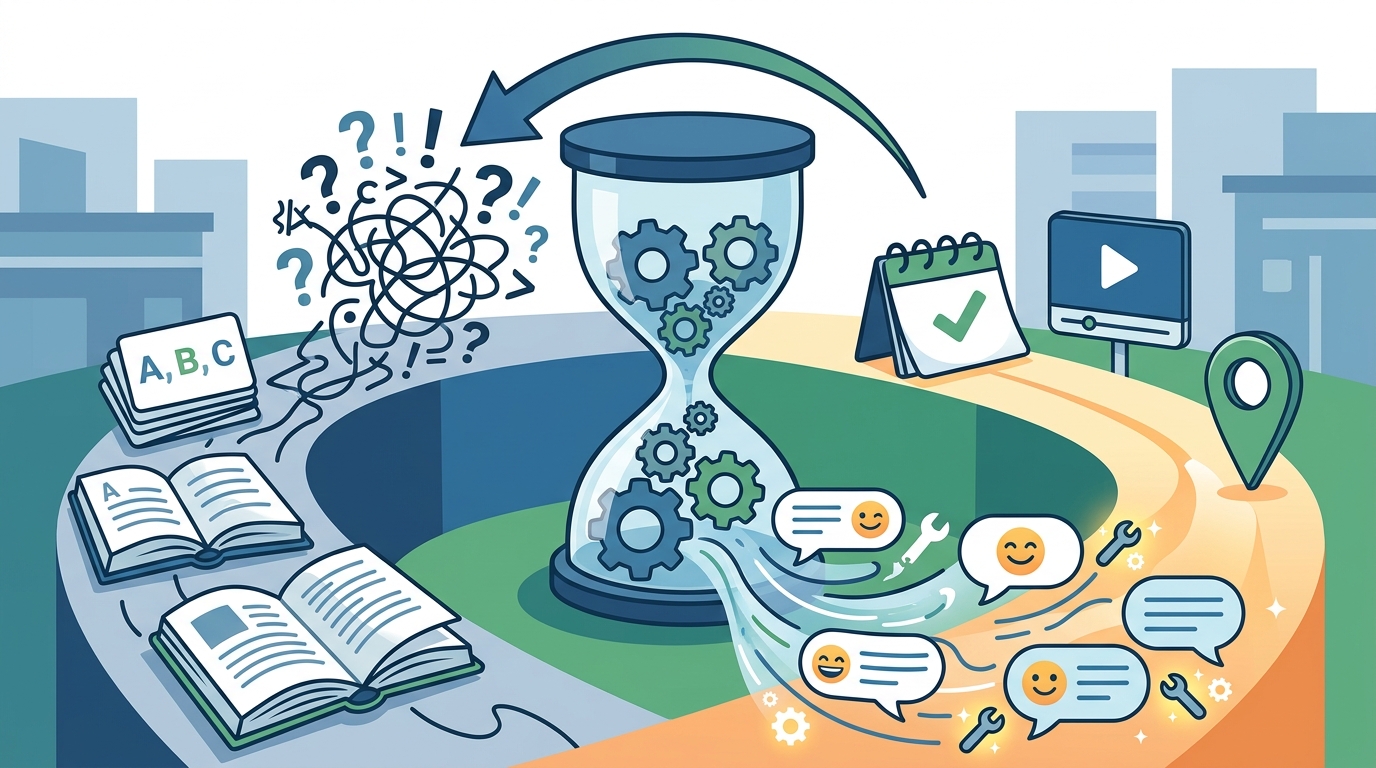
How to Correct Mistakes in Real-Time
Correcting mistakes requires a shift in mindset. Many learners fear making errors, which leads to silence. However, errors are essential data points for learning. The most effective way to correct them is through immediate, gentle feedback from native speakers. In a traditional classroom, you might not get this feedback until after the lesson. In our conversational classes, corrections happen in the moment, reinforcing the correct form while the context is fresh.
Another method is self-correction through recording. Listening to your own speech can highlight patterns of error that you miss while speaking. Our 90-Day Spanish Bootcamp encourages daily engagement, which includes reviewing your progress and identifying recurring mistakes. This reflective practice accelerates improvement by turning errors into targeted learning goals.
Finally, immersion is the ultimate corrective tool. Surrounding yourself with Spanish media, music, and conversation forces your brain to adapt. Our social club events, both in-person in San Diego and online, provide these immersive opportunities. By participating in these events, you practice correcting yourself in real-time, building confidence and fluency simultaneously.
Integrating Corrections with the 90-Day Bootcamp
The 90-Day Spanish Bootcamp is designed to address these common mistakes systematically. By committing to daily tasks, you build the habit of active correction. The bootcamp includes daily conversation questions, weekly classes, and monthly events. This structure ensures that you are not just learning grammar but applying it in real-world contexts.
During the bootcamp, you will receive feedback from teachers and peers. This multi-source feedback helps you identify blind spots in your language use. For example, you might think you are pronouncing "R" correctly, but a peer might point out a subtle difference. This collaborative correction is more effective than solitary study.
The bootcamp also emphasizes consistency over perfection. By showing up daily, you allow your brain to process and correct errors subconsciously. This approach aligns with modern language acquisition research, which suggests that frequency of exposure is more important than intensity of study. Joining the bootcamp connects you with a community of learners who are all working to overcome the same mistakes.
Frequently Asked Questions
How long does it take to stop making common Spanish mistakes?
There is no fixed timeline, as it depends on your frequency of practice. However, learners who engage in daily conversation see significant improvement within three to six months. Consistency is more important than intensity.
Can I correct my mistakes if I only study online?
Yes. Our online classes via Zoom provide real-time correction from native speakers. Additionally, our Patreon and social media platforms offer daily feedback opportunities that simulate in-person correction.
What is the difference between "ser" and "estar"?
Ser is used for permanent characteristics, identity, and origin. Estar is used for temporary states, locations, and ongoing actions. Understanding this distinction is crucial for accurate communication.
How do I fix my pronunciation of the rolled "R"?
Practice placing the tip of your tongue against the roof of your mouth and vibrating it. Listening to native speakers and getting real-time feedback in our classes is the most effective way to master this sound.
Are the social events only for advanced learners?
No. Our social events cater to all levels, from A1 to advanced. We have specific events for different proficiency levels to ensure everyone can participate and benefit from the practice.
What is the 90-Day Spanish Bootcamp?
It is a structured program that combines daily practice, weekly classes, and monthly events to help learners break through plateaus and build consistent Spanish-speaking habits.
Do I need to be in San Diego to join?
No. While we have in-person events in San Diego, our online classes and social events are accessible to learners worldwide. You can participate fully from anywhere.
Start Your Conversational Journey
Stop letting fear of mistakes hold you back from fluency. The path to confident Spanish speaking begins with embracing errors as learning opportunities. At Pura Buena Onda, we provide the supportive, immersive environment you need to correct these mistakes in real-time. Whether you join our small-group classes, semi-private sessions, or the intensive 90-Day Bootcamp, you will gain the skills and confidence to speak naturally.
Take the first step today. Schedule a free consultation to discuss your goals and find the perfect learning path for you. Join a community that values real conversation over rote memorization. Your journey to fluency starts now.